
CTAL-TM_UK · Question #45
Assume that you are the Test Manager for a small banking application development project. You have decided to adopt a risk-based testing strategy and 5 product risks (R1, R2, R3, R4, and R5) have…
Sign in or unlock CTAL-TM_UK to reveal the answer and full explanation for question #45. The question stem and answer options stay visible for context.
Question
Assume that you are the Test Manager for a small banking application development project. You have decided to adopt a risk-based testing strategy and 5 product risks (R1, R2, R3, R4, and R5) have been identified during the quality risk analysis. The following table shows the risk level associated to these product risks (higher numbers mean higher risk):
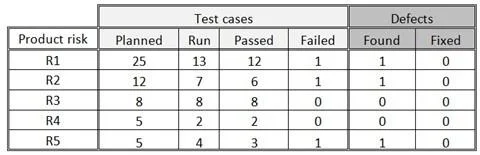
55 test cases have been designed and implemented to cover all these 5 product risks. The coverage is described in a traceability matrix. This is the test execution status table, after the after the first week of test execution:
About 56% of the planned test cases have been successfully executed. Assume that no additional product risks have been identified during the first week of test execution. Which of the following answers would you expect to best describe the residual risks associated with the identified product risks, at the end of the first week of test execution?
Exhibit
Options
- ASince R3 is the only risk for which all test cases have passed, the risk has been reduced by
- BThe test execution status table indicates that the risk has been reduced by 56%
- CThe residual risk level can't be determined, because it requires that all the test cases have
- DThe test execution table doesn't give an indication of the risk level of the open defects and the
Unlock CTAL-TM_UK to see the answer
You've previewed enough free CTAL-TM_UK questions. Unlock CTAL-TM_UK for full answers, explanations, the timed quiz mode, progress tracking, and the master PDF. Question stem and options stay visible so you can still see what's on the exam.