
C_TB1200_10 · Question #43
A user was assigned data ownership authorizations as shown in the attached screenshot. What will this user be able to do? Note: There are 2 correct answers to this question.
The correct answer is C. View invoices owned by this user's manager D. View and update invoices owned by employees who report directly to this user. In data ownership authorization models (common in SAP and similar ERP systems), access rights differ based on direction in the hierarchy: Downward (subordinates): A manager has full view and update rights over data owned by direct reports - this is option D, which is correct…
Question
A user was assigned data ownership authorizations as shown in the attached screenshot. What will this user be able to do? Note: There are 2 correct answers to this question.
Exhibit
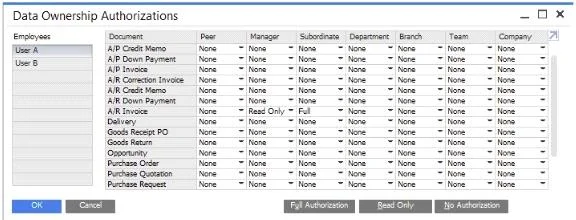
Options
- AView and update invoices owned by this user's manager
- BView invoices owned by employees who report directly to this user
- CView invoices owned by this user's manager
- DView and update invoices owned by employees who report directly to this user
How the community answered
(49 responses)- A12% (6)
- B4% (2)
- C84% (41)
Explanation
In data ownership authorization models (common in SAP and similar ERP systems), access rights differ based on direction in the hierarchy:
- Downward (subordinates): A manager has full view and update rights over data owned by direct reports - this is option D, which is correct.
- Upward (manager): A user can view their manager's data for visibility purposes, but cannot modify it - this is option C, which is correct.
Why A is wrong: The user cannot update their manager's invoices - only view them. Write access does not flow upward in the hierarchy.
Why B is wrong: The user can do more than merely view subordinates' data - they also have update rights. B understates the downward authority.
Memory tip: Think of it as "read up, read-write down." You can see what your boss owns (read only), but you can manage what your team owns (read + write). Authority flows downward, visibility flows upward.
Topics
Community Discussion
No community discussion yet for this question.