
AZ-500 · Question #149
A company currently has several subscriptions. They are all associated with the same Azure AD tenant. You have to ensure that all subscriptions have the same role assignments. How can this be done…
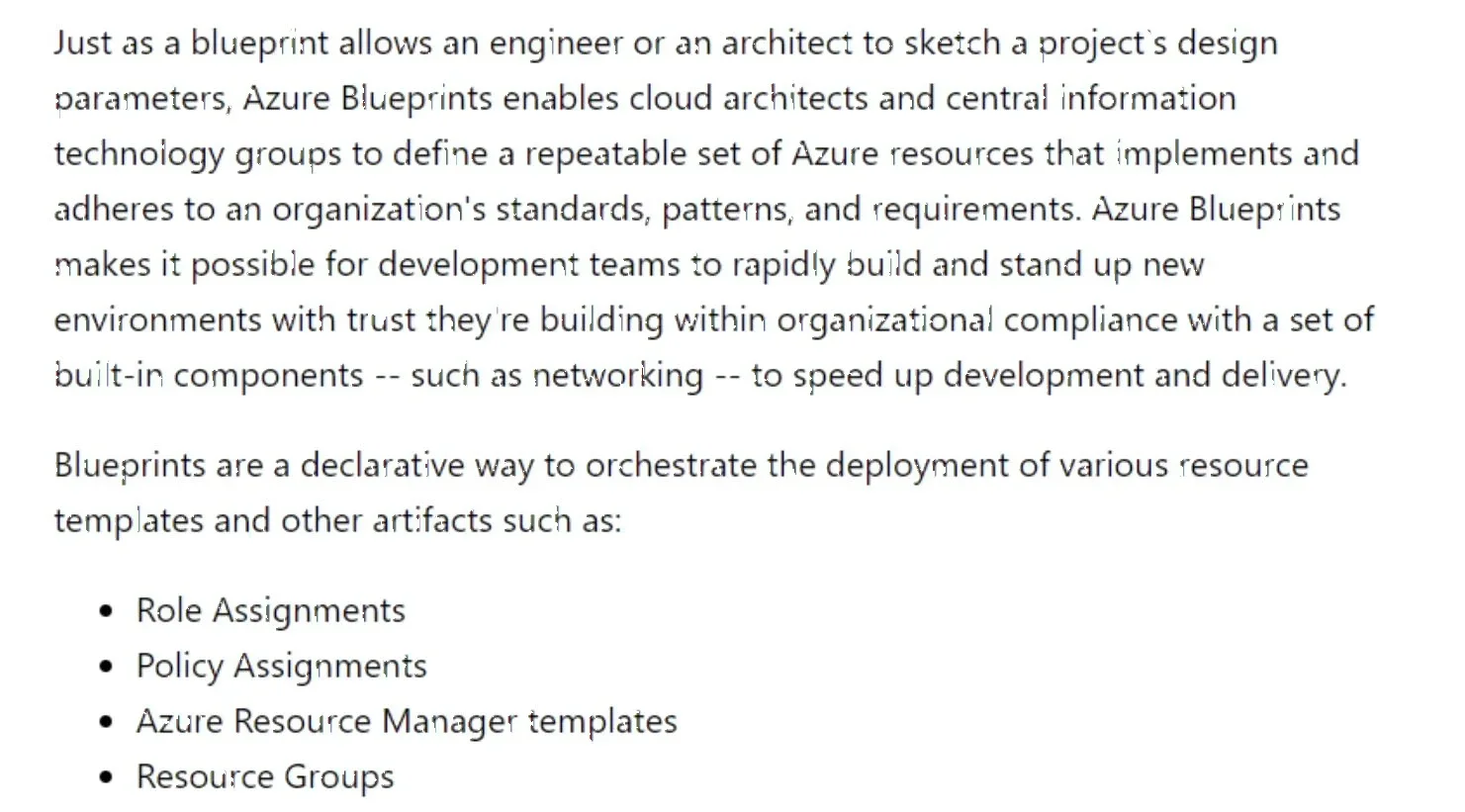
The correct answer is B. By using Azure Blueprints. Azure Blueprints for Consistent Role Assignments Azure Blueprints (B) is the correct choice because it allows you to define a repeatable set of governance tools - including role assignments (RBAC), policies, and resource templates - and apply them consistently across multiple…
Question
Exhibit
Options
- ABy using Azure Security Center policies
- BBy using Azure Blueprints
- CBy using Azure AD Privileged Identity Management
- DBy using Azure Policy
How the community answered
(45 responses)- A2% (1)
- B84% (38)
- C4% (2)
- D9% (4)
Explanation
Azure Blueprints for Consistent Role Assignments
Azure Blueprints (B) is the correct choice because it allows you to define a repeatable set of governance tools - including role assignments (RBAC), policies, and resource templates - and apply them consistently across multiple subscriptions within the same Azure AD tenant. Blueprints are specifically designed to enforce standards and configurations at scale across subscriptions.
Why the distractors are wrong:
- A (Azure Security Center policies): Security Center focuses on threat protection and security posture monitoring, not on standardizing role assignments across subscriptions.
- C (Azure AD Privileged Identity Management): PIM manages just-in-time and time-bound privileged access for individual users, but cannot enforce uniform role assignments across multiple subscriptions simultaneously.
- D (Azure Policy): Azure Policy enforces resource compliance rules (e.g., allowed VM sizes, required tags), but it cannot manage role assignments - that is outside its scope.
Memory Tip: Think of Blueprints like an architectural blueprint for a building - it defines the complete structure (roles, policies, templates) that gets stamped consistently across every subscription, just like identical buildings from the same plan. If the question mentions role assignments + multiple subscriptions, think Blueprints.
Topics
Community Discussion
No community discussion yet for this question.