
AZ-305 · Question #252
Hotspot Question You have an app that generates 50,000 events daily. You plan to stream the events to an Azure event hub and use Event Hubs Capture to implement cold path processing of the events…
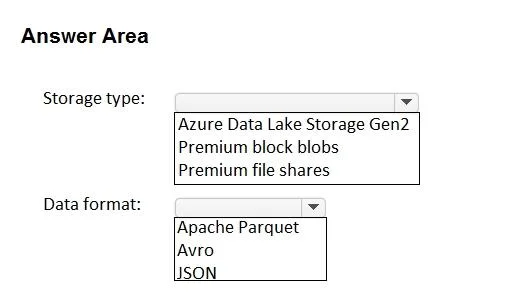
The correct answer is Storage type:: Azure Data Lake Storage Gen2; Data format:: Avro. This hotspot question tests knowledge of Azure Event Hubs Capture requirements, specifically the storage backend it uses and the file format it produces for downstream consumption.
Question
Exhibits
Answer Area
- Storage type:Azure Data Lake Storage Gen2Azure Data Lake Storage Gen2Premium block blobsPremium file shares
- Data format:AvroApache ParquetAvroJSON
Explanation
This hotspot question tests knowledge of Azure Event Hubs Capture requirements, specifically the storage backend it uses and the file format it produces for downstream consumption.
Approach. Event Hubs Capture automatically saves streaming data to Azure Blob Storage (or Azure Data Lake Storage Gen1/Gen2), so you must provision an Azure Blob Storage account to support it. The captured data is written in Apache Avro format - a compact, binary, row-based serialization format - so the reporting system must support ingesting Avro-formatted files. These two requirements (Blob Storage + Avro format) are fixed characteristics of the Event Hubs Capture feature and are not configurable to other storage types or output formats.
Concept tested. Azure Event Hubs Capture storage requirements and output data format (Avro). Specifically: (1) Event Hubs Capture requires Azure Blob Storage or Azure Data Lake Storage - NOT Azure Table Storage, Queue Storage, or Azure SQL. (2) The capture output is always in Apache Avro format - NOT JSON, CSV, or Parquet - so any consuming system (like a reporting tool) must be capable of parsing Avro files.
Reference. https://learn.microsoft.com/en-us/azure/event-hubs/event-hubs-capture-overview
Topics
Community Discussion
No community discussion yet for this question.