
AZ-104 · Question #300
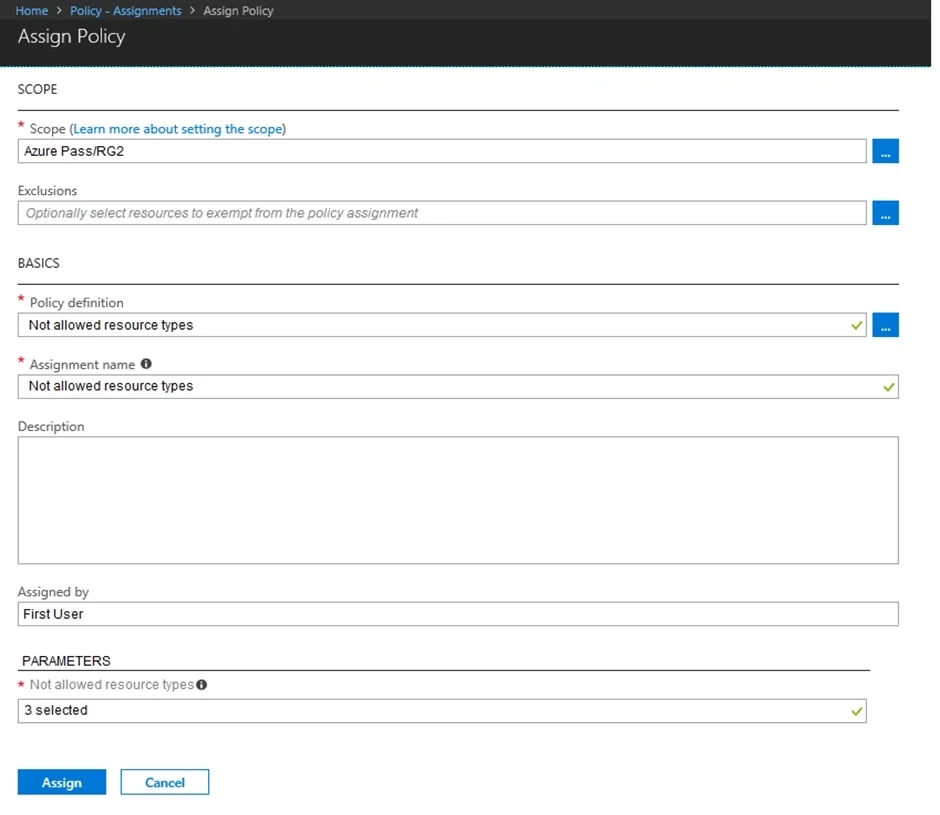
Hotspot Question You have an Azure subscription that contains the resources shown in the following table. The status of VM1 is Running. You assign an Azure policy as shown in the exhibit. (Click the…
The correct answer is An administrator can move VNET1 to RG2 = No; The state of VM1 changed to deallocated = No; An administrator can modify the address space of VNET2 = No. The Azure policy being assigned is a 'Not allowed resource types' policy, which prevents the creation or modification of specified resource types (Classic VNets, VNets, and VMs) within the scope. Moving VNET1 to RG2 is not allowed because a move operation is treated as a…
Question
Exhibits
Answer Area
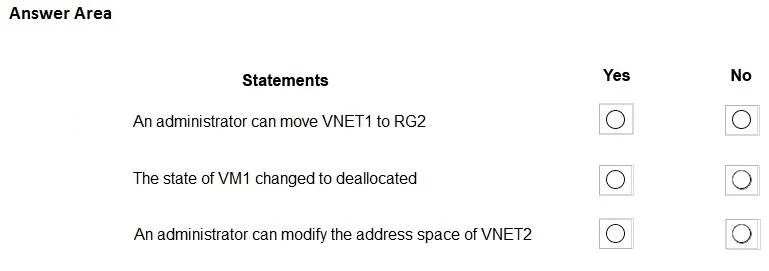
- An administrator can move VNET1 to RG2No
- The state of VM1 changed to deallocatedNo
- An administrator can modify the address space of VNET2No
Explanation
The Azure policy being assigned is a 'Not allowed resource types' policy, which prevents the creation or modification of specified resource types (Classic VNets, VNets, and VMs) within the scope. Moving VNET1 to RG2 is not allowed because a move operation is treated as a create/delete action for the resource type Microsoft.Network/virtualNetworks, which is blocked by the policy. VM1's state does not change to deallocated because the policy only prevents new deployments or modifications - it does not retroactively affect already running resources. Modifying the address space of VNET2 is also blocked because changing the address space constitutes a write/update operation on a Microsoft.Network/virtualNetworks resource, which the policy denies.
Topics
Community Discussion
No community discussion yet for this question.