
4A0-107 · Question #93
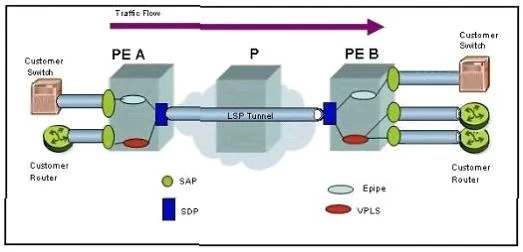
Click the exhibit button below. The service provider has both a VLL (epipe) service and a VPLS, as shown in the diagram below. At router PE B, traffic arriving from both services will have the same…
The correct answer is B. FALSE. Option B is correct because in Nokia SR OS, network-queue policies are bound to network interfaces (ports), not to service types. Since the VLL (epipe) and VPLS services may traverse different network interfaces at PE B - as shown in the diagram - each interface can have its…
Question
Click the exhibit button below. The service provider has both a VLL (epipe) service and a VPLS, as shown in the diagram below. At router PE B, traffic arriving from both services will have the same network-queue policy applied.
Exhibit
Options
- ATRUE
- BFALSE
How the community answered
(38 responses)- A26% (10)
- B74% (28)
Explanation
Option B is correct because in Nokia SR OS, network-queue policies are bound to network interfaces (ports), not to service types. Since the VLL (epipe) and VPLS services may traverse different network interfaces at PE B - as shown in the diagram - each interface can have its own independently configured network-queue policy, meaning the two service types are not guaranteed to share the same one.
Option A is wrong because it assumes a shared policy simply because both services terminate at the same PE router; co-location at PE B does not force a common network-queue policy across different interfaces or service instances.
Memory tip: Think "interface-bound, not service-bound." In Nokia SR OS, QoS at the network level attaches to the port/interface, so an epipe and a VPLS on different network-facing interfaces are free to have entirely different queue policies - the router doesn't impose uniformity just because the services share a PE node.
Topics
Community Discussion
No community discussion yet for this question.