
4A0-107 · Question #89
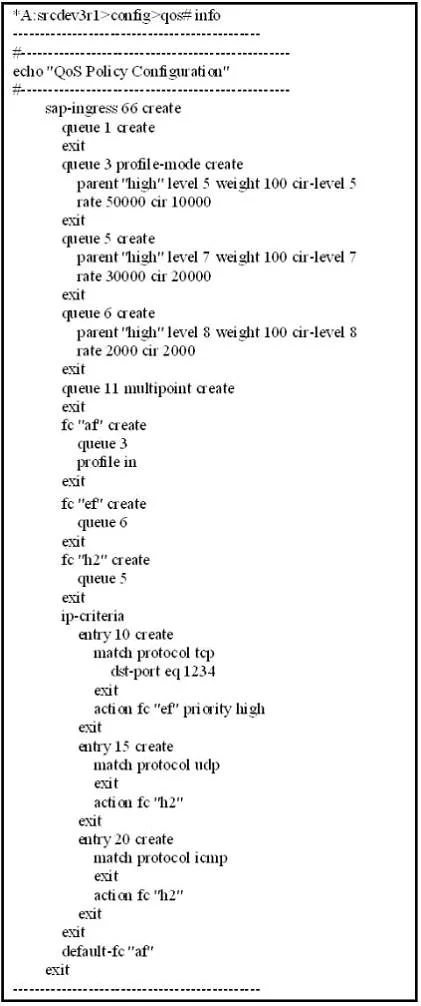
Click the exhibit button below. Given the SAP-ingress policy, which of the following statements are FALSE? (Choose three)
The correct answer is B. UDP traffic can be serviced at a maximum rate of 20 Mbps. D. Queues 5 and 6 will receive equal portions of any remaining available bandwidth to meet their E. Queue 3 is scheduled before queue 5. Options B, D, and E are false statements about the SAP-ingress policy. B is false because the exhibit does not show UDP traffic capped at 20 Mbps - the rate limit shown is different, making this an invented figure. D is false because Queue 5 operates in priority mode (as…
Question
Click the exhibit button below. Given the SAP-ingress policy, which of the following statements are FALSE? (Choose three)
Exhibit
Options
- AQueue 5 is using priority mode.
- BUDP traffic can be serviced at a maximum rate of 20 Mbps.
- CPing traffic is place in queue 5.
- DQueues 5 and 6 will receive equal portions of any remaining available bandwidth to meet their
- EQueue 3 is scheduled before queue 5.
How the community answered
(17 responses)- A18% (3)
- B71% (12)
- C12% (2)
Explanation
Options B, D, and E are false statements about the SAP-ingress policy. B is false because the exhibit does not show UDP traffic capped at 20 Mbps - the rate limit shown is different, making this an invented figure. D is false because Queue 5 operates in priority mode (as confirmed by the true statement in A), meaning it does not share leftover bandwidth equally with Queue 6 - priority queues are served first and are not part of weighted/equal bandwidth distribution. E is false because a queue in priority mode is served before non-priority queues regardless of queue number, so Queue 5 is actually scheduled before Queue 3, not after.
The distractors A and C are true: Queue 5 is indeed in priority mode per the policy definition, and ICMP/ping traffic is classified into Queue 5 via the FC mapping shown in the exhibit.
Memory tip: Remember "PEW - Priority changes Everything and the Wrong order." Priority mode (A=true) breaks both equal-share assumptions (D=false) and simple queue-number ordering (E=false). Whenever you see a priority queue, immediately rule out any claim about equal bandwidth sharing or lower-numbered queues being served first.
Topics
Community Discussion
No community discussion yet for this question.