
350-501 · Question #611
Refer to the exhibit. Users on a LAN that is connected to RD communicate to multiple servers on the corporate network. Initially, the servers were located on the same LAN. However, after congestion…
The correct answer is D. Identify the traffic to each server with a class map and apply it to a traffic-shaping policy. To improve network performance and prevent congestion caused by server traffic while ensuring all traffic flows, implementing traffic shaping with class maps is an effective Quality of Service (QoS) solution.
Question
Refer to the exhibit. Users on a LAN that is connected to RD communicate to multiple servers on the corporate network. Initially, the servers were located on the same LAN. However, after congestion was reported, the engineering team decided to relocate the servers to two different networks. Which task should the team perform to improve performance on the overall network while still allowing traffic to flow between the different hosts?
Exhibit
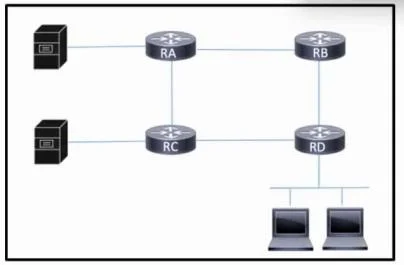
Options
- AIdentify the traffic to each server in a prefix list and apply a traffic policing policy.
- BIdentify the traffic to each server with an ACL and apply the ACL to a threshold policy that drops
- CIdentify the traffic to each server in a distribute list and implement FIFO to the interfaces in the
- DIdentify the traffic to each server with a class map and apply it to a traffic-shaping policy.
How the community answered
(48 responses)- A4% (2)
- B8% (4)
- C17% (8)
- D71% (34)
Why each option
To improve network performance and prevent congestion caused by server traffic while ensuring all traffic flows, implementing traffic shaping with class maps is an effective Quality of Service (QoS) solution.
Traffic policing drops or re-marks packets that exceed a configured rate, which can lead to packet loss during congestion and does not guarantee that all traffic will flow, contrary to the requirement to improve performance while still allowing traffic to flow.
A threshold policy that drops packets, identified by an ACL, is a form of congestion avoidance that discards traffic during periods of high utilization, which does not allow all traffic to flow and can negatively impact applications.
A distribute list is used for route filtering, not for traffic management or Quality of Service (QoS). FIFO (First-In, First-Out) queuing does not provide any preferential treatment or congestion control mechanisms to improve performance during high traffic.
A class map is used to classify and identify specific traffic flows, such as traffic destined for the different servers, based on criteria like IP addresses or port numbers. Applying this class map to a traffic-shaping policy allows the network to buffer and delay traffic that exceeds a configured rate, smoothing out bursts and preventing congestion without dropping packets, thus improving overall network performance and allowing all traffic to flow.
Concept tested: QoS traffic shaping with class maps
Source: https://www.cisco.com/c/en/us/td/docs/ios/qos/configuration/guide/fqos_c/qcfshpng.html
Topics
Community Discussion
No community discussion yet for this question.