
350-501 · Question #580
Refer to the exhibit. Users on a LAN connected to R2 frequently open high-traffic connections with a server connected to R1. During heavy usage periods, the link between R1 and R2 becomes congested…
The correct answer is C. Implement traffic policing on the network with CBWFQ to drop unnecessary traffic that exceeds a. To improve performance on the congested link between R1 and R2 while allowing all traffic to flow, the engineering team should implement traffic policing in conjunction with Class-Based Weighted Fair Queuing (CBWFQ).
Question
Refer to the exhibit. Users on a LAN connected to R2 frequently open high-traffic connections with a server connected to R1. During heavy usage periods, the link between R1 and R2 becomes congested. Which action must the engineering team take to improve performance on the link while still allowing traffic to flow?
Exhibit
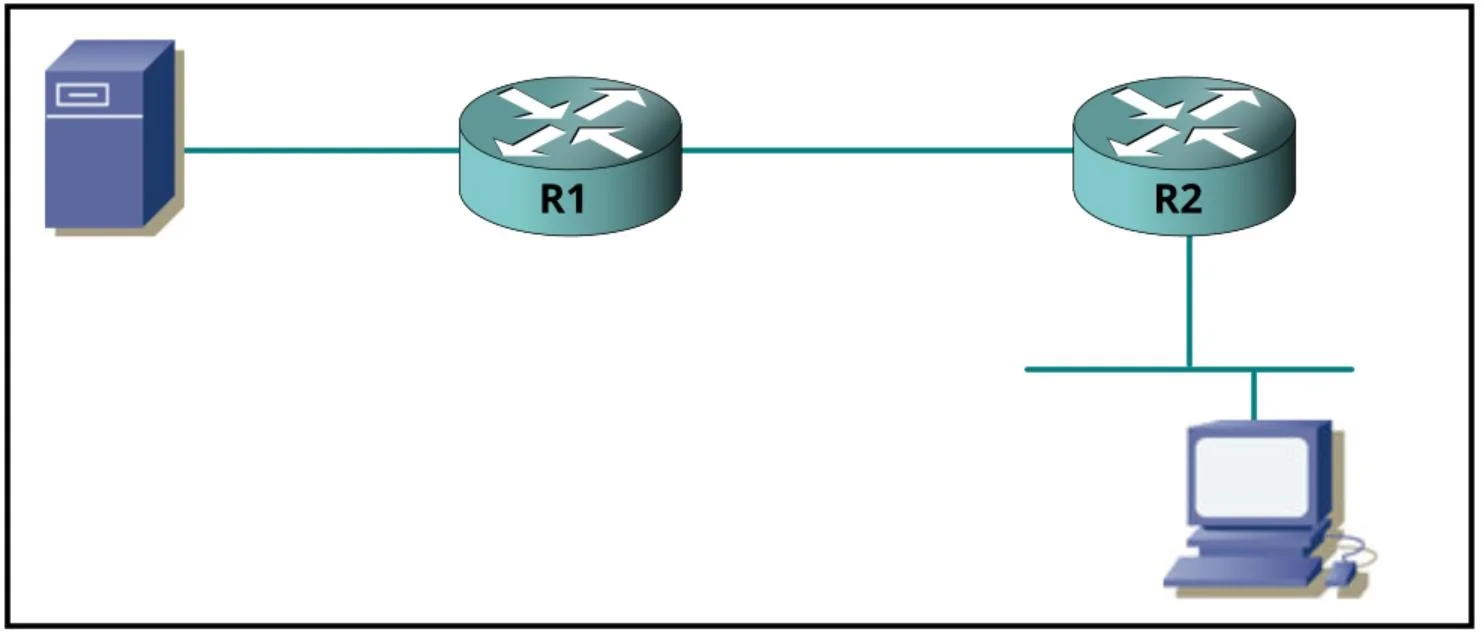
Options
- AImplement FIFO on R1 and R2 to queue traffic through the congested link so that all traffic can
- BImplement traffic shaping on R2 to control the timing of data transmission between R1 and R2 for
- CImplement traffic policing on the network with CBWFQ to drop unnecessary traffic that exceeds a
- DImplement LLQ with a strict policy on the network lo ensure that all traffic from the server is sent
How the community answered
(45 responses)- A2% (1)
- B9% (4)
- C84% (38)
- D4% (2)
Why each option
To improve performance on the congested link between R1 and R2 while allowing all traffic to flow, the engineering team should implement traffic policing in conjunction with Class-Based Weighted Fair Queuing (CBWFQ).
FIFO (First-In, First-Out) is the default queuing mechanism and does not offer prioritization or active congestion management, thus it will not inherently improve performance on an already congested link.
Traffic shaping primarily delays packets to smooth out bursts and regulate the transmission rate, but on a consistently congested link, it might introduce additional delay without solving the underlying issue of insufficient bandwidth or prioritization.
Implementing traffic policing allows the network to drop traffic that exceeds a defined rate, thereby mitigating congestion from unnecessary high-volume flows. Combined with CBWFQ, essential traffic can be guaranteed bandwidth and prioritized, improving overall link performance during heavy usage while ensuring that traffic continues to flow under controlled conditions.
Low Latency Queuing (LLQ) with a strict policy prioritizes critical, delay-sensitive traffic. Applying it to 'all traffic from the server' indiscriminately for high-traffic connections could starve other necessary traffic, which is not optimal for general performance improvement.
Concept tested: QoS congestion management with policing and CBWFQ
Source: https://www.cisco.com/c/en/us/td/docs/ios-xml/ios/qos_conmgt/configuration/15-mt/qos-conmgt-15-mt-book/qos-conmgt-cfg.html
Topics
Community Discussion
No community discussion yet for this question.