
350-501 · Question #469
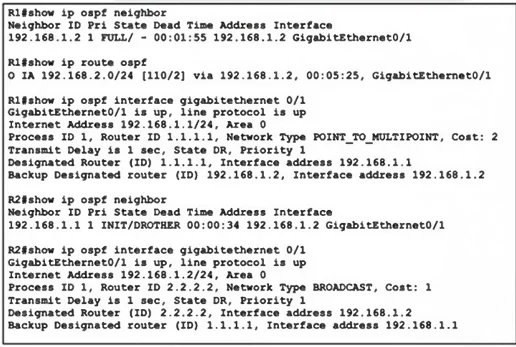
Refer to the exhibit. A junior network engineer has been configuring OSPF on two directly connected routers, R1 and R2, to establish a neighbor adjacency. The engineer also configured ip route…
The correct answer is C. Change the network type on R2 to point-to-multipoint. From the exhibit, R1 is configured with a network type of Point-to-Multipoint, while R2 is configured with a network type of Broadcast. For OSPF adjacency to form, the network types on both sides must match. Changing the network type on R2 to Point-to-Multipoint will ensure…
Question
Refer to the exhibit. A junior network engineer has been configuring OSPF on two directly connected routers, R1 and R2, to establish a neighbor adjacency. The engineer also configured ip route 10.1.1.0 255.255.255.0 GigabitEthernet 0/1 10.10.10.1 on R1 to allow inbound management. After the initial configuration, the adjacency failed to form. The engineer changed the cost and area type under the OSPF configuration on R1, but the problem persists. Which action must the engineer take to resolve the issue?
Exhibit
Options
- ADecrease the OSPF cost on R1 to match the cost on R2.
- BSet the OSPF process ID on R1 to match the OSPF process ID on R2.
- CChange the network type on R2 to point-to-multipoint.
- DRemove the static route on R1 and enable OSPF under the Gi0/1 interface.
How the community answered
(54 responses)- A13% (7)
- B6% (3)
- C56% (30)
- D26% (14)
Explanation
From the exhibit, R1 is configured with a network type of Point-to-Multipoint, while R2 is configured with a network type of Broadcast. For OSPF adjacency to form, the network types on both sides must match. Changing the network type on R2 to Point-to-Multipoint will ensure compatibility with R1, resolving the adjacency issue.
Topics
Community Discussion
No community discussion yet for this question.