
350-401 · Question #1015
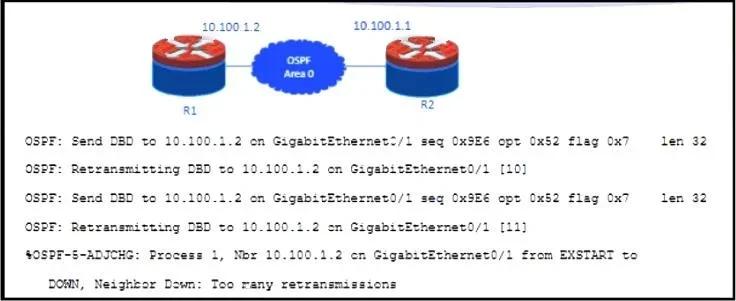
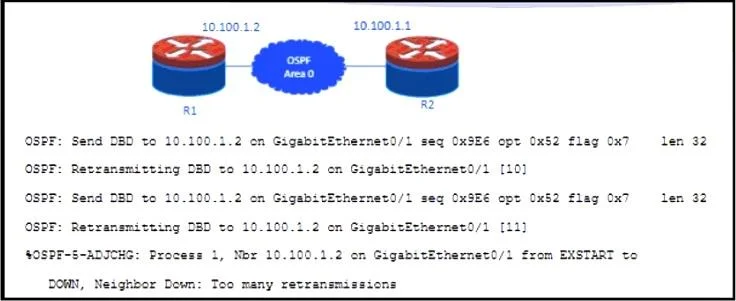
Refer to the exhibit. Why does OSPF fail to establish an adjacency between R1 and R2?
The correct answer is B. interface MTU mismatch. OSPF fails to establish adjacency between R1 and R2 when there is an interface MTU mismatch, as it prevents the successful exchange of Database Description (DD) packets.
Question
Refer to the exhibit. Why does OSPF fail to establish an adjacency between R1 and R2?
Exhibits
Options
- Aauthentication mismatch
- Binterface MTU mismatch
- Ctimers mismatch
- Darea mismatch
How the community answered
(43 responses)- A14% (6)
- B58% (25)
- C5% (2)
- D23% (10)
Why each option
OSPF fails to establish adjacency between R1 and R2 when there is an interface MTU mismatch, as it prevents the successful exchange of Database Description (DD) packets.
An authentication mismatch would prevent adjacency formation, but the question specifically points to MTU as the correct reason, implying the exhibit showed no authentication issues.
An MTU mismatch between R1 and R2's interfaces can prevent OSPF adjacency from forming because OSPF packets, particularly Database Description (DD) packets, are sent with the interface MTU. If the MTU values differ, these packets might be dropped by the receiving router if they exceed its configured MTU, thereby stalling the OSPF negotiation process at the ExStart/Exchange state.
A timers mismatch (hello or dead intervals) would prevent adjacency formation, but the question specifically points to MTU as the correct reason, implying the exhibit showed no timer issues.
An area mismatch would prevent adjacency formation between routers that are meant to be in the same area, but the question specifically points to MTU as the correct reason, implying the exhibit showed no area ID issues.
Concept tested: OSPF MTU mismatch preventing adjacency
Source: https://www.cisco.com/c/en/us/support/docs/ip/open-shortest-path-first-ospf/13689-18.html
Topics
Community Discussion
No community discussion yet for this question.