
312-49 · Question #449
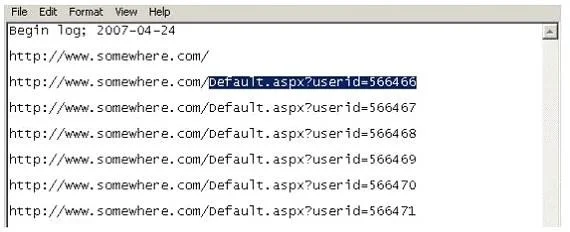
Using Internet logging software to investigate a case of malicious use of computers, the investigator comes across some entries that appear odd. From the log, the investigator can see where the…
The correct answer is A. Parameter tampering. Parameter tampering (also called URL manipulation or insecure direct object reference) is the technique of manually modifying parameter values in a URL, form field, or HTTP request to access unauthorized data or functionality. In this case, the attacker was cycling through…
Question
Using Internet logging software to investigate a case of malicious use of computers, the investigator comes across some entries that appear odd. From the log, the investigator can see where the person in question went on the Internet. From the log, it appears that the user was manually typing in different user ID numbers. What technique this user was trying?
Exhibit
Options
- AParameter tampering
- BCross site scripting
- CSQL injection
- DCookie Poisoning
How the community answered
(54 responses)- A80% (43)
- B2% (1)
- C6% (3)
- D13% (7)
Explanation
Parameter tampering (also called URL manipulation or insecure direct object reference) is the technique of manually modifying parameter values in a URL, form field, or HTTP request to access unauthorized data or functionality. In this case, the attacker was cycling through different user ID numbers in a URL (e.g., ?user_id=1001, ?user_id=1002) hoping the server would return account data without proper authorization checks. This differs from SQL injection (malicious SQL syntax in input), XSS (injecting client-side scripts), and cookie poisoning (modifying cookie values). Parameter tampering exploits applications that trust client-supplied parameters without server-side validation.
Topics
Community Discussion
No community discussion yet for this question.