
300-740 · Question #12
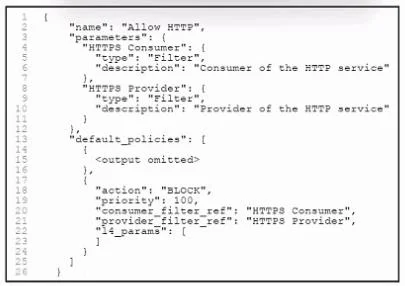
Refer to the exhibit. An engineer must create a segmentation policy in Cisco Secure Workload to block HTTP traffic. The indicated configuration was applied; however, HTTP traffic is still allowed…
The correct answer is B. Add HTTP to 14_params. Option B is correct because in Cisco Secure Workload, l4_params (Layer 4 parameters) defines the specific ports and protocols the policy matches against - if HTTP (port 80) is not listed there, the policy simply never matches HTTP traffic, so it cannot block it regardless of…
Question
Refer to the exhibit. An engineer must create a segmentation policy in Cisco Secure Workload to block HTTP traffic. The indicated configuration was applied; however, HTTP traffic is still allowed. What should be done to meet the requirement?
Exhibit
Options
- AChange consumer_filter_ref to HTTP Consumer.
- BAdd HTTP to 14_params.
- CDecrease the priority of the template to 50.
- DIncrease the priority of the template to 200.
How the community answered
(26 responses)- A15% (4)
- B73% (19)
- C4% (1)
- D8% (2)
Explanation
Option B is correct because in Cisco Secure Workload, l4_params (Layer 4 parameters) defines the specific ports and protocols the policy matches against - if HTTP (port 80) is not listed there, the policy simply never matches HTTP traffic, so it cannot block it regardless of any other configuration.
Why the distractors are wrong:
- A is wrong because
consumer_filter_refidentifies which workloads are the traffic source, not what type of traffic is filtered - changing it would shift the policy's scope, not fix the protocol match. - C is wrong because lowering priority doesn't help when the rule never matches HTTP in the first place; a higher-priority rule that doesn't match still does nothing.
- D is wrong for the same reason - adjusting priority only matters when competing rules conflict; it cannot make a rule match traffic it was never configured to catch.
Memory tip: Think of l4_params as the policy's "traffic fingerprint scanner" - if you don't register HTTP/port 80 in it, the scanner never recognizes HTTP packets and the rule stays idle. Always verify L4 params first when a Cisco Secure Workload policy fails to act on a specific protocol.
Topics
Community Discussion
No community discussion yet for this question.