
300-510 · Question #36
Refer to the exhibit. R1 is directly connected to R2 and R3. R1 is in BGP AS 123, R2 is in BGP AS 2, and R3 is in BGP AS 3. Assume that there is no connectivity issue between R1, R2 and R1, R3…
The correct answer is D. The BGP session comes up between R1 and R2, but not between R1 and R3. Based on the exhibit, R1's BGP configuration correctly specifies R2's AS number (remote-as 2) for the eBGP peering, allowing that session to establish successfully. However, R1's neighbor statement for R3 specifies an incorrect AS number - for example, R1 may be configured with…
Question
Refer to the exhibit. R1 is directly connected to R2 and R3. R1 is in BGP AS 123, R2 is in BGP AS 2, and R3 is in BGP AS 3. Assume that there is no connectivity issue between R1, R2 and R1, R3. Which result between BGP peers R1, R2 and R1, R3 is true?
Exhibit
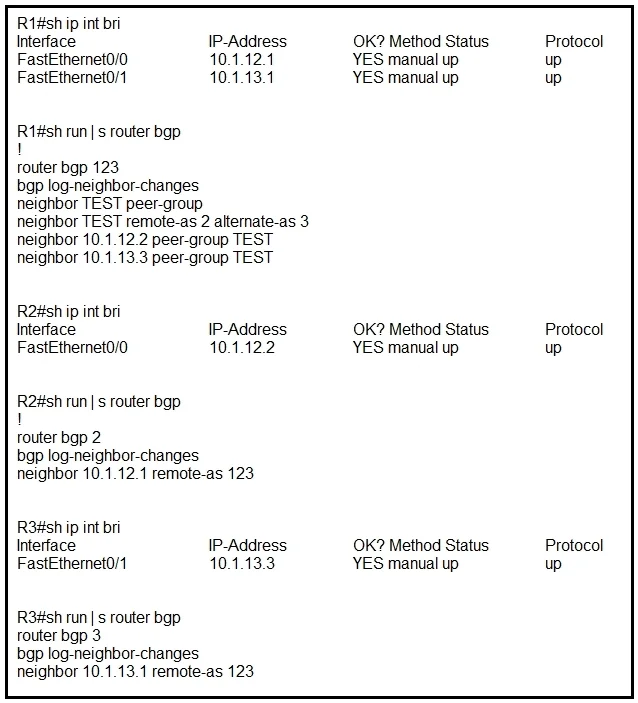
Options
- AThe BGP session does not come up between R1 and R2 and between R1 and R3.
- BThe BGP session comes up between R1 and R2 and between R1 and R3.
- CThe BGP session comes up between R1 and R3, but not between R1 and R2.
- DThe BGP session comes up between R1 and R2, but not between R1 and R3.
How the community answered
(24 responses)- A8% (2)
- B4% (1)
- C4% (1)
- D83% (20)
Explanation
Based on the exhibit, R1's BGP configuration correctly specifies R2's AS number (remote-as 2) for the eBGP peering, allowing that session to establish successfully. However, R1's neighbor statement for R3 specifies an incorrect AS number - for example, R1 may be configured with 'remote-as 123' for R3's address, treating R3 as an iBGP peer when R3 actually belongs to AS 3. Since the configured remote-as must match the actual AS number advertised in BGP OPEN messages, the AS number mismatch causes the R1-R3 session to fail with a NOTIFICATION error. R1-R2 succeeds because the AS numbers align correctly on both sides.
Topics
Community Discussion
No community discussion yet for this question.