
220-1102 · Question #540
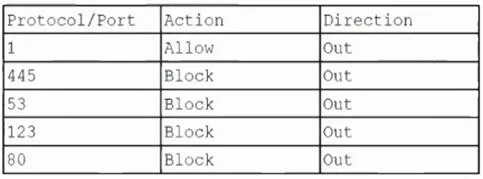
A technician is troubleshooting a PC that is unable to perform DNS lookups. Utilizing the following firewall output: Which of the following ports should be opened to allow for DNS recursion?
The correct answer is B. 53. To allow for DNS recursion, which is essential for resolving domain names, port 53 must be opened in the firewall. Port 53 is the standard port used by DNS servers for both UDP (queries) and TCP (zone transfers).
Question
A technician is troubleshooting a PC that is unable to perform DNS lookups. Utilizing the following firewall output:
Which of the following ports should be opened to allow for DNS recursion?
Exhibit
Options
- A1
- B53
- C80
- D123
- E445
How the community answered
(36 responses)- A3% (1)
- B94% (34)
- D3% (1)
Why each option
To allow for DNS recursion, which is essential for resolving domain names, port 53 must be opened in the firewall. Port 53 is the standard port used by DNS servers for both UDP (queries) and TCP (zone transfers).
Port 1 is reserved and not used for DNS services.
Port 53 is the well-known port for the Domain Name System (DNS). Both UDP port 53 (for standard queries and responses, including recursion) and TCP port 53 (primarily for zone transfers and DNSSEC) must be accessible for proper DNS functionality.
Port 80 is used for HTTP (Hypertext Transfer Protocol), which is for web browsing, not DNS.
Port 123 is used by NTP (Network Time Protocol) for time synchronization, not DNS.
Port 445 is used by Microsoft-DS (Directory Services) for SMB (Server Message Block) over TCP, commonly associated with file sharing and active directory, not DNS.
Concept tested: DNS port and functionality
Source: https://learn.microsoft.com/en-us/windows-server/networking/dns/what-is-dns
Topics
Community Discussion
No community discussion yet for this question.