
200-301 · Question #1539
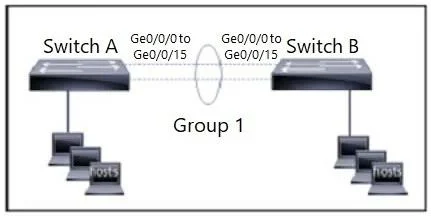
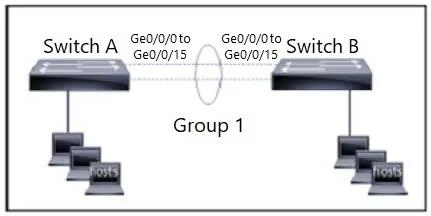
Refer to the exhibit. The LACP EtherChannel is configured, and the last change is to modify the interfaces on SwitchA to respond to packets received, but not to initiate negotiation. The interface…
The correct answer is D. SwitchA(config-if-range)#channel-group 1 mode passive. To configure an LACP EtherChannel interface to respond to negotiation packets without initiating them, the passive mode must be set.
Question
Exhibits
Options
- ASwitchA(config-if-range)#channel-group 1 mode auto
- BSwitchA(config-if-range)#channel-group 1 mode active
- CSwitchA(config-if-range)#channel-group 1 mode desirable
- DSwitchA(config-if-range)#channel-group 1 mode passive
How the community answered
(53 responses)- A2% (1)
- B11% (6)
- C6% (3)
- D81% (43)
Why each option
To configure an LACP EtherChannel interface to respond to negotiation packets without initiating them, the passive mode must be set.
The 'mode auto' keyword is used for PAgP (Port Aggregation Protocol) passive mode, not LACP.
The 'mode active' keyword configures LACP to actively initiate and respond to negotiation packets, which contradicts the requirement to 'not to initiate negotiation'.
The 'mode desirable' keyword is used for PAgP (Port Aggregation Protocol) active mode, not LACP.
To configure LACP to respond to EtherChannel negotiation packets but not initiate them, the 'channel-group' command must use the 'mode passive' keyword. This ensures that SwitchA forms an EtherChannel only when the connected switch is actively seeking to establish one.
Concept tested: LACP EtherChannel modes
Source: https://www.cisco.com/c/en/us/td/docs/switches/lan/catalyst3850/software/release/3se/consolidated/configuration_guide/b_consolidated_3850_3se_cg/b_consolidated_3850_3se_cg_chapter_0100010.html#concept_35930D98863A401A9E371C800922BAA1
Topics
Community Discussion
No community discussion yet for this question.