
Oracle
1Z0-007 · Question #13
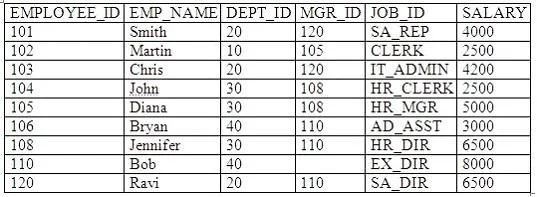
Examine the data of the EMPLOYEES table. EMPLOYEES (EMPLOYEE_ID is the primary key. MGR_ID is the ID of managers and refers to the EMPLOYEE_ID) Which statement lists the ID, name, and salary of the…
Sign in or unlock 1Z0-007 to reveal the answer and full explanation for question #13. The question stem and answer options stay visible for context.
Displaying Data from Multiple Tables and Subqueries
Question
Examine the data of the EMPLOYEES table. EMPLOYEES (EMPLOYEE_ID is the primary key. MGR_ID is the ID of managers and refers to the EMPLOYEE_ID) Which statement lists the ID, name, and salary of the employee, and the ID and name of the employee's manager, for all the employees who have a manager and earn more than 4000?
Exhibit
Options
- ASELECT employee_id "Emp_id", emp_name "Employee",
- BSELECT e.employee_id "Emp_id", e.emp_name "Employee",
- CSELECT e.employee_id "Emp_id", e.emp_name "Employee",
- DSELECT e.employee_id "Emp_id", e.emp_name "Employee",
- ESELECT e.employee_id "Emp_id", e.emp_name "Employee",
Unlock 1Z0-007 to see the answer
You've previewed enough free 1Z0-007 questions. Unlock 1Z0-007 for full answers, explanations, the timed quiz mode, progress tracking, and the master PDF. Question stem and options stay visible so you can still see what's on the exam.
Topics
#self-join#table aliases#manager-employee relationship#WHERE filtering