
1Z0-007 · Question #27
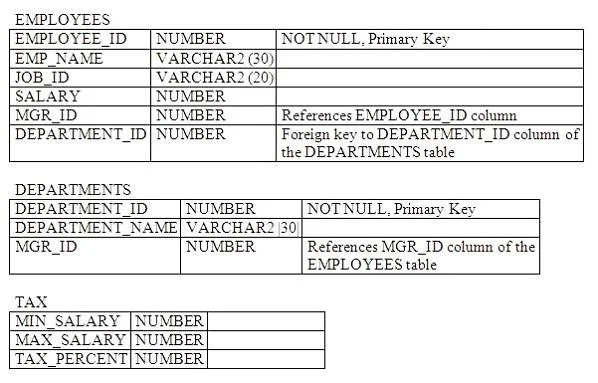
Examine the structure of the EMPLOYEES, DEPARTMENTS, and TAX tables. For which situation would you use a nonequijoin query?
The correct answer is A. To find the tax percentage for each of the employees. You will use a nonequijoin query to find the tax percentage for each of the employees because you will check range of salaries without usage of equality operations in a comparison joining data from two tables. Incorrect Answers B: You will use equijoin query because EMPLOYEES…
Question
Examine the structure of the EMPLOYEES, DEPARTMENTS, and TAX tables. For which situation would you use a nonequijoin query?
Exhibit
Options
- ATo find the tax percentage for each of the employees.
- BTo list the name, job id, and manager name for all the employees.
- CTo find the name, salary, and department name of employees who are not working with Smith.
- DTo find the number of employees working for the Administrative department and earning less then 4000.
- ETo display name, salary, manager ID, and department name of all the employees, even if the employees
How the community answered
(44 responses)- A84% (37)
- B9% (4)
- C5% (2)
- D2% (1)
Explanation
You will use a nonequijoin query to find the tax percentage for each of the employees because you will check range of salaries without usage of equality operations in a comparison joining data from two tables. Incorrect Answers B: You will use equijoin query because EMPLOYEES and DEPARTMENTS tables will be joined with equality operator. C: It will be equijoin query because EMPLOYEES and DEPARTMENTS tables will be joined with equality operator. D: You will use equijoin query because EMPLOYEES and DEPARTMENTS tables will be joined with equality operator. E: It will be equijoin query because of equality operator in join condition of two tables.
Topics
Community Discussion
No community discussion yet for this question.