
Oracle
1Z0-007 · Question #133
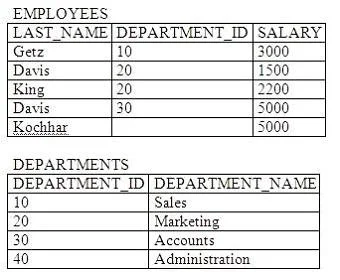
Examine the data in the EMPLOYEES and DEPARTMENTS tables. You want to retrieve all employees, whether or not they have matching departments in the departments table. Which query would you use?
Sign in or unlock 1Z0-007 to reveal the answer and full explanation for question #133. The question stem and answer options stay visible for context.
Displaying Data from Multiple Tables and Subqueries
Question
Examine the data in the EMPLOYEES and DEPARTMENTS tables. You want to retrieve all employees, whether or not they have matching departments in the departments table. Which query would you use?
Exhibit
Options
- ASELECT last_name, department_name
- BSELECT last_name, department_name
- CSELECT last_name, department_name
- DSELECT last_name, department_name
- ESELECT last_name, department_name
- FSELECT last_name, department_name
Unlock 1Z0-007 to see the answer
You've previewed enough free 1Z0-007 questions. Unlock 1Z0-007 for full answers, explanations, the timed quiz mode, progress tracking, and the master PDF. Question stem and options stay visible so you can still see what's on the exam.
Topics
#outer join#LEFT OUTER JOIN#EMPLOYEES table#DEPARTMENTS table