
101 · Question #708
The Web application Server made a query to the Database to present dynamic content for a user who would be the client?
The correct answer is D. The Web application server. In a multi-tier web architecture, the component that initiates a request to another service is acting as the client. When the Web application server queries the Database, the Web application server is the client in that transaction.
Question
The Web application Server made a query to the Database to present dynamic content for a user who would be the client?
Exhibit
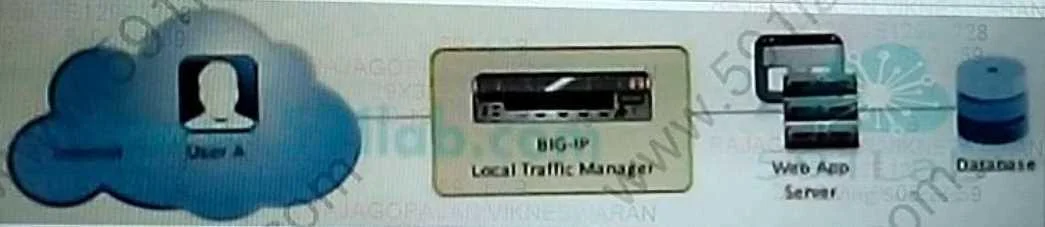
Options
- AThe User
- BThe Big-IP
- CThe Database
- DThe Web application server
How the community answered
(27 responses)- B4% (1)
- C4% (1)
- D93% (25)
Why each option
In a multi-tier web architecture, the component that initiates a request to another service is acting as the client. When the Web application server queries the Database, the Web application server is the client in that transaction.
The user is the client of the Web application server, not the client in the specific Web application server-to-Database transaction described.
The BIG-IP is a traffic management device that sits between clients and servers; it does not initiate the database query described in this scenario.
The Database is the server in this transaction - it receives and processes the query initiated by the Web application server, making it the server, not the client.
In client-server architecture, the client is defined as the entity that initiates a request to a server. The Web application server originates the database query to retrieve data needed for dynamic content, making it the client in the Web application server-to-Database relationship, not the end user who is the client of the Web application server.
Concept tested: Client-server roles in multi-tier web architecture
Source: https://www.f5.com/glossary/three-tier-application
Topics
Community Discussion
15 Viktor S.Jun 26, 2026
D is right. In this flow the web application server is the one initiating the query to the database, which makes it the client in that specific transaction, because "client" just means whoever is making the request, and the role shifts depending on which leg of the communication you are looking at.
 Irfan M.Jun 29, 2026
Viktor has the role-shift concept right, though it is worth being precise that "client" is not just whoever makes the request in a given moment, it is the role assigned to the initiator for the full duration of that session or transaction, so the web server does not flip back and forth mid-connection, it holds the client role from the TCP handshake through the final response from the database.
 Lena V.Feb 26, 2026
D is the correct answer. In a three-tier web architecture, the client is whoever initiates the request to a service, and in this specific interaction the Web application server is the one sending a query to the Database, so from the Database's perspective that server is the client. The end user triggered the whole chain, but the question is scoped to the relationship between the Web application server and the Database, not the user and the web server. Know this distinction cold because the exam will test you on which tier is acting as client depending on which leg of the transaction they describe.
 Bao N.Mar 4, 2026
First time I saw this one I went straight for A, because the whole setup is about serving content to the user and my brain just locked onto that. But then I slowed down and re-read the question, specifically the phrase "made a query to the Database." The client in any transaction is whoever is initiating the request to a service, not whoever benefits at the end of the chain. The user kicks off the whole thing by hitting the web app, sure, but in the specific server-to-database conversation being described, the Web application server is the one reaching out to the database asking for data, so D is your client there. Classic trap question because they load the scenario with the user front and center to pull your eyes away from the actual relationship being tested.
Lena V.Mar 5, 2026That framing holds up perfectly and the thing I'd add is that this client-server dynamic is always relative to the specific connection being described, so if an exam question zooms into any one hop in a multi-tier chain, you redraw the picture for just that hop and ignore the rest of the flow.
 Yusuf A.Mar 10, 2026
The tricky part here is that "client" is relative to which connection you are looking at, because yes the user is a client of the web app server, but the question specifically asks who made the query to the database, so in that particular connection it is the web application server acting as the client making the request. D is the right pick, and my mentor drilled this into me: always ask "client of what?" before you answer.
Bao N.Mar 12, 2026Exactly right, and the follow-up habit I use is to trace the data flow one hop at a time so you never accidentally swap client and server mid-chain when the diagram has three or more tiers.
 Brenda K.Jun 17, 2026
I almost went with A because the question starts by talking about the user, and my brain just grabbed onto that, but then I slowed down and re-read it. The question asks who made the query to the database, and that action belongs to D, the web application server, since the user only clicks and waits while the server does the actual work of fetching dynamic content on their behalf.
 Toby R.Mar 6, 2026
The tricky part is that "client" in this question means the system making the request, not the end user sitting at a browser, so a lot of people get pulled toward A because the whole flow starts with the user. But in the specific relationship between the web app server and the database, the web application server is the one initiating the query, making it the client in that transaction, so the answer is D.
Irfan M.Jun 26, 2026Took me a second on this one because I kept thinking "client" meant the person at the keyboard, but when you trace the actual transaction, the Web application server initiates the query to the Database, so in that exchange the Web app server is the client and the Database is the server. Saw this same framing trip up half the people in my study group, D is your answer.
Brenda K.Jun 27, 2026Solid catch on the context-switching, Irfan, but flag this one and move on fast because the role-flip concept shows up again in trickier three-tier variants where you need to spot the client-server relationship at each layer separately, so drill that pattern and do not let any single instance of it cost you more than 30 seconds on exam day.
 Mateus R.Jun 26, 2026
Right, D is the correct pick here. Think of it like a waiter at a restaurant: the waiter (web application server) takes your order to the kitchen (database) and brings the food back to you, so the waiter is both the one making the request and the one serving the client, which makes the web application server the client to the database in that exchange.
Irfan M.Jun 29, 2026The analogy works fine for basic client-server role assignment, but it glosses over the part where the waiter also caches the specials in memory so he does not have to walk to the kitchen every time someone asks, which is the piece that makes connection pooling and query caching worth understanding for the exam.
 Luis F.Mar 11, 2026
Gotta be A, the user is literally who the dynamic content is being served to!
Toby R.Mar 12, 2026Totally get the logic Luis, but A trips people up because the user receives the dynamic content, they do not define or control what makes it dynamic. D is correct because it is the origin server that actually generates the response based on the request parameters, which is what makes the content dynamic in the first place.