
SPLK-1002 · Question #260
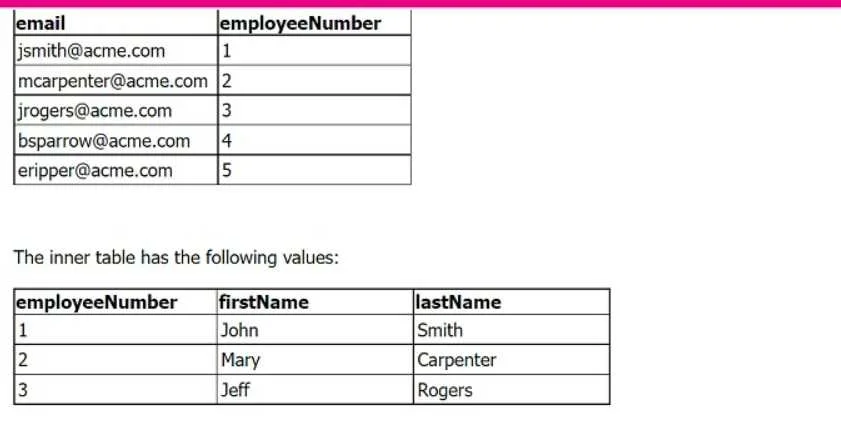
Two separate results tables are being combined using the | join command. The outer table has the following values: Refer to following Tables The line of SPL used to join the tables is: | join…
The correct answer is C. Eight. When performing an outer join in Splunk using the | join employeeNumber type=outer command, it combines the rows from both tables based on the employeeNumber field. An outer join returns all rows from both tables, with matching rows from both sides where available. If there is…
Question
Two separate results tables are being combined using the | join command. The outer table has the following values:
Refer to following Tables The line of SPL used to join the tables is: | join employeeNumber type=outer How many rows are returned in the new table?
Exhibit
Options
- AZero
- BFive
- CEight
- DThree
How the community answered
(60 responses)- B2% (1)
- C95% (57)
- D3% (2)
Explanation
When performing an outer join in Splunk using the | join employeeNumber type=outer command, it combines the rows from both tables based on the employeeNumber field. An outer join returns all rows from both tables, with matching rows from both sides where available. If there is no match, the result is NULL on the side of the join where there is no match. In the provided tables, there are five rows in the first table and three in the second. Since it's an outer join, all rows from both tables will be returned. This means the new table will have a total of eight rows, combining the matched rows and the unmatched rows from both tables.
Topics
Community Discussion
No community discussion yet for this question.