
SC-100 · Question #37
Your company has an on-premises network and an Azure subscription. The company does NOT have a Site-to-Site VPN or an ExpressRoute connection to Azure. You are designing the security standards for…
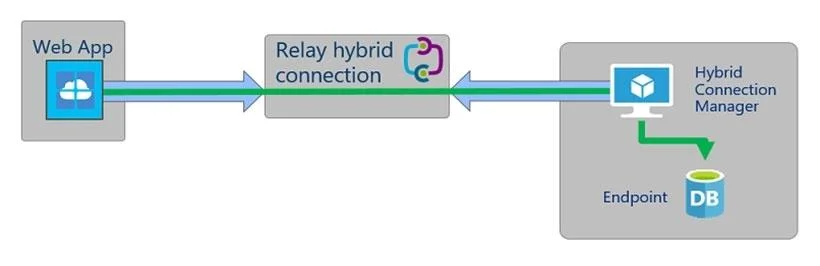
The correct answer is B. hybrid connections. The correct answer is B: Hybrid Connections. Azure App Service Hybrid Connections allow web apps to access on-premises TCP resources (like SQL Server) without requiring a Site-to-Site VPN, ExpressRoute, or any open inbound firewall ports on the on-premises side. The Hybrid…
Question
Your company has an on-premises network and an Azure subscription. The company does NOT have a Site-to-Site VPN or an ExpressRoute connection to Azure. You are designing the security standards for Azure App Service web apps. The web apps will access Microsoft SQL Server databases on the network. You need to recommend security standards that will allow the web apps to access the databases. The solution must minimize the number of open internet- accessible endpoints to the on-premises network. What should you include in the recommendation?
Exhibit
Options
- Aa private endpoint
- Bhybrid connections
- Cvirtual network NAT gateway integration
- Dvirtual network integration
How the community answered
(46 responses)- A4% (2)
- B72% (33)
- C7% (3)
- D17% (8)
Explanation
The correct answer is B: Hybrid Connections. Azure App Service Hybrid Connections allow web apps to access on-premises TCP resources (like SQL Server) without requiring a Site-to-Site VPN, ExpressRoute, or any open inbound firewall ports on the on-premises side. The Hybrid Connection Manager (HCM) agent installed on-premises initiates an outbound connection to Azure Service Bus relay - no internet-accessible endpoint is needed on-premises. Option A (private endpoint) creates a private IP for an Azure resource, not for on-premises resources. Option C (NAT gateway integration) controls outbound internet IPs from Azure, not connectivity to on-premises. Option D (VNet integration) lets web apps reach Azure VNet resources but still requires a VPN or ExpressRoute to reach on-premises, which the scenario explicitly states is not available.
Topics
Community Discussion
No community discussion yet for this question.