
RCDD-002 · Question #11
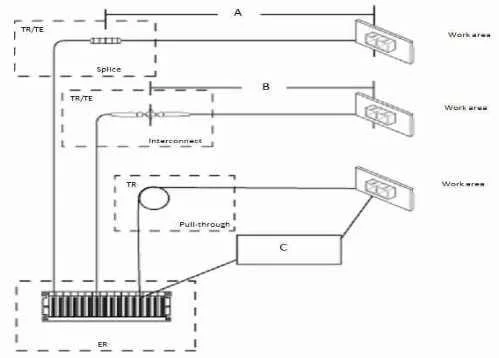
What is the MAXIMUM recommended length for A in the image below?
The correct answer is B. 90 m (295 ft). Option B (90 m / 295 ft) is correct because it matches the TIA/EIA-568 structured cabling standard, which limits horizontal cable runs - the segment labeled "A" from the telecommunications room to the work area outlet - to a maximum of 90 meters. This 90 m limit reserves the…
Question
What is the MAXIMUM recommended length for A in the image below?
Exhibit
Options
- A70 m (230 ft)
- B90 m (295 ft)
- C100 m (320 ft)
- D150 m (495 ft)
- E300 m (985 ft)
How the community answered
(22 responses)- A14% (3)
- B77% (17)
- C5% (1)
- D5% (1)
Explanation
Option B (90 m / 295 ft) is correct because it matches the TIA/EIA-568 structured cabling standard, which limits horizontal cable runs - the segment labeled "A" from the telecommunications room to the work area outlet - to a maximum of 90 meters. This 90 m limit reserves the remaining 10 m of the 100 m total channel budget for patch cords and equipment cables on both ends.
Why the distractors are wrong:
- A (70 m): Too short - this is not a recognized maximum; it may tempt those who recall a "safety margin" figure but no standard sets this limit.
- C (100 m): This is the total channel length (horizontal run + all patch cords combined), not the permanent link maximum - a common and dangerous mix-up.
- D (150 m): Exceeds both the permanent link and total channel limits; no standard copper cabling run supports this.
- E (300 m): Far beyond copper limits; 300 m is in the range of fiber optic distances, not copper horizontal runs.
Memory tip: Think "90 + 10 = 100." The permanent link (A) caps at 90 m, patch cords take the last 10 m, and the total channel is 100 m. If you remember the full channel is 100 m, subtract 10 m for cords and you land on the correct answer every time.
Topics
Community Discussion
No community discussion yet for this question.