
PCNSE · Question #742
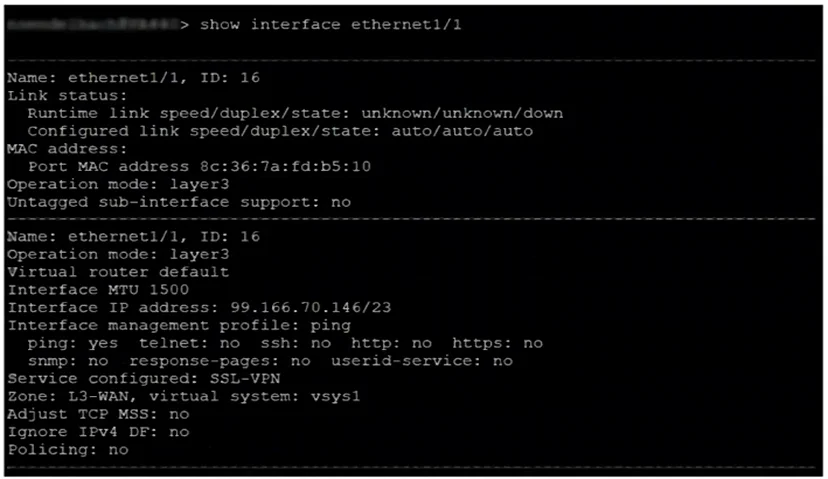
After switching to a different WAN connection, users have reported that various websites will not load, and timeouts are occurring. The web servers work fine from other locations. The firewall…
Sign in or unlock PCNSE to reveal the answer and full explanation for question #742. The question stem and answer options stay visible for context.
Question
After switching to a different WAN connection, users have reported that various websites will not load, and timeouts are occurring. The web servers work fine from other locations. The firewall engineer discovers that some return traffic from these web servers is not reaching the users behind the firewall. The engineer later concludes that the maximum transmission unit (MTU) on an upstream router interface is set to 1400 bytes. The engineer reviews the following CLI output for ethernet1/1. Which setting should be modified on ethernet1/1 to remedy this problem?
Exhibit
Options
- AChange the subnet mask from /23 to /24.
- BLower the interface MTU value below 1500.
- CAdjust the TCP maximum segment size (MSS) value.
- DEnable the Ignore IPv4 Don't Fragment (DF) setting.
Unlock PCNSE to see the answer
You've previewed enough free PCNSE questions. Unlock PCNSE for full answers, explanations, the timed quiz mode, progress tracking, and the master PDF. Question stem and options stay visible so you can still see what's on the exam.