
PCNSA · Question #69
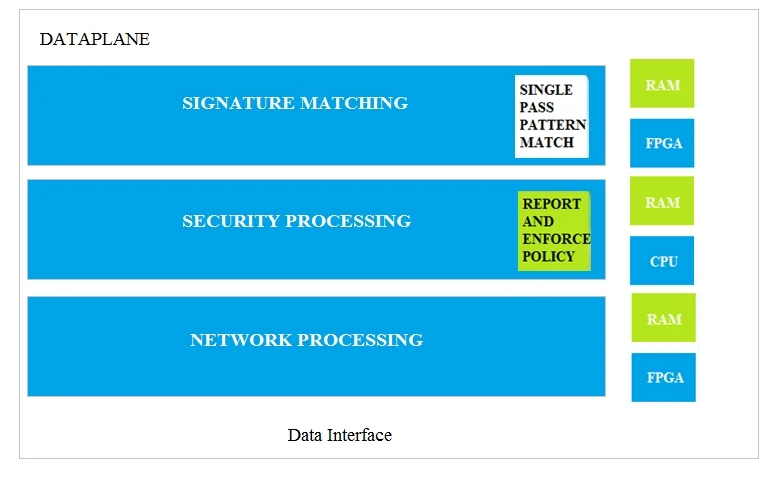
Which data-plane processor layer of the graphic shown provides uniform matching for spyware and vulnerability exploits on a Palo Alto Networks Firewall?
The correct answer is A. Signature Matching. The Signature Matching layer within the Palo Alto Networks data plane is responsible for uniformly identifying and preventing spyware and vulnerability exploits using signatures.
Question
Which data-plane processor layer of the graphic shown provides uniform matching for spyware and vulnerability exploits on a Palo Alto Networks Firewall?
Exhibit
Options
- ASignature Matching
- BNetwork Processing
- CSecurity Processing
- DSecurity Matching
How the community answered
(37 responses)- A89% (33)
- B3% (1)
- C5% (2)
- D3% (1)
Why each option
The Signature Matching layer within the Palo Alto Networks data plane is responsible for uniformly identifying and preventing spyware and vulnerability exploits using signatures.
Within the Palo Alto Networks Single-Pass Parallel Processing (SP3) architecture, the Signature Matching engine is responsible for uniformly scanning traffic against signatures for threats like spyware and vulnerability exploits. This single pass scan ensures efficient and comprehensive threat detection across all threat types.
Network Processing is a broader term that encompasses initial packet handling, routing, and NAT, but not the specific signature-based threat detection for spyware and exploits.
Security Processing is a general term for the overall security functions performed by the data plane, but "Signature Matching" is the specific layer for uniform threat detection.
"Security Matching" is not a standard or specific layer term in the Palo Alto Networks SP3 architecture.
Concept tested: Data plane signature matching for threat detection
Source: https://docs.paloaltonetworks.com/pan-os/10-2/pan-os-admin/getting-started/palo-alto-networks-firewall-technologies/single-pass-parallel-processing-sp3-architecture
Topics
Community Discussion
No community discussion yet for this question.