
NSE4_FGT-7.0 · Question #75
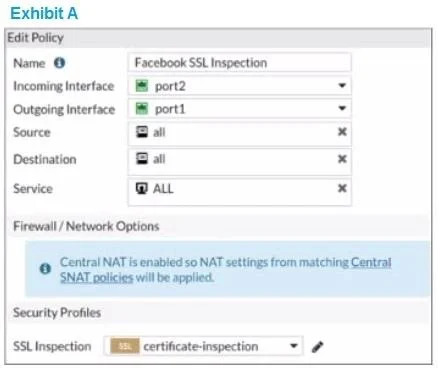
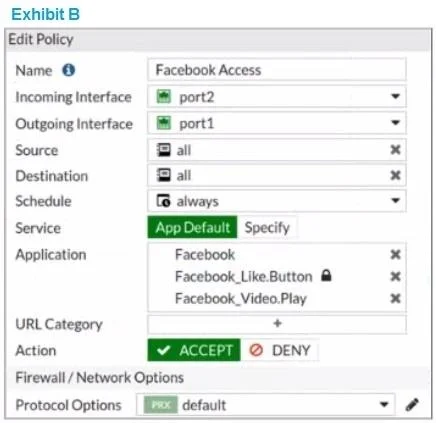
Refer to the exhibits. The exhibits show the SSL and authentication policy (Exhibit A) and the security policy (Exhibit B) tor Facebook. Users are given access to the Facebook web application. They…
The correct answer is A. The SSL inspection needs tobe a deep content inspection. To enable full functionality of a web application like Facebook, including interactive elements like reactions, the FortiGate firewall must perform deep content SSL inspection to fully analyze and control encrypted traffic.
Question
Refer to the exhibits. The exhibits show the SSL and authentication policy (Exhibit A) and the security policy (Exhibit B) tor Facebook. Users are given access to the Facebook web application. They can play video content hosted on Facebook but they areunableto leavereactions on videos or other types ofposts. Which part ofthe policy configuration must you change to resolve the issue?
Exhibits
Options
- AThe SSL inspection needs tobe a deep content inspection.
- BForce access to Facebook using the HTTP service.
- CAdditional application signatures arerequired to add to thesecurity policy.
- DAdd Facebook in the URL category in the security policy.
How the community answered
(28 responses)- A64% (18)
- B4% (1)
- C21% (6)
- D11% (3)
Why each option
To enable full functionality of a web application like Facebook, including interactive elements like reactions, the FortiGate firewall must perform deep content SSL inspection to fully analyze and control encrypted traffic.
Many web application functionalities, such as posting reactions or interacting with dynamic content, rely on specific API calls or encrypted traffic that can only be fully inspected and controlled when SSL inspection is set to deep content inspection. Without deep inspection, the firewall might not be able to fully understand and allow all necessary encrypted components for interactive features, even if basic content like video streaming is permitted.
Forcing HTTP service for Facebook is insecure and impractical, as modern web applications predominantly use HTTPS for security, and forcing HTTP would likely break the application or expose user data.
While application signatures are used for granular control, if basic access and video playback work, the issue likely lies with the inability to inspect deeper into encrypted traffic rather than missing signatures for specific interactive elements, which deep inspection helps with.
Adding Facebook to a URL category in the security policy primarily controls access based on the URL itself and doesn't inherently resolve issues with encrypted interactive application features when deep SSL inspection is lacking.
Concept tested: SSL deep content inspection for application functionality
Source: https://docs.fortinet.com/document/fortigate/7.4.0/administration-guide/524338/ssl-inspection
Topics
Community Discussion
No community discussion yet for this question.