
N10-009 · Question #480
An employee has a new laptop and reports slow performance when using the wireless network. Switch firmware was updated the previous night. A network administrator logs in to the switch and sees the…
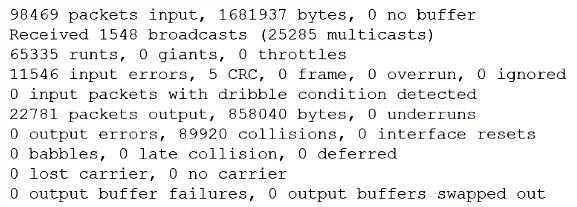
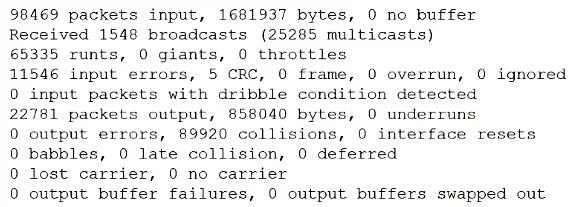
The correct answer is D. The NIC is set to half duplex. The switch interface shows 89,920 collisions, which is a strong indicator of a duplex mismatch. This typically occurs when one end of the connection (in this case, the NIC on the employee’s laptop) is set to half duplex, while the switch port is operating in full duplex. In…
Question
An employee has a new laptop and reports slow performance when using the wireless network. Switch firmware was updated the previous night. A network administrator logs in to the switch and sees the following statistics on the switch interface for that employee:
Which of the following is most likely the cause of the issue?
Exhibits
Options
- AThe patch cord from the wall jack is faulty.
- BThe switchport bandwidth needs to be increased.
- CMulticast is not configured correctly on the switch.
- DThe NIC is set to half duplex.
How the community answered
(50 responses)- A2% (1)
- B4% (2)
- C10% (5)
- D84% (42)
Explanation
The switch interface shows 89,920 collisions, which is a strong indicator of a duplex mismatch. This typically occurs when one end of the connection (in this case, the NIC on the employee’s laptop) is set to half duplex, while the switch port is operating in full duplex. In half duplex, devices must wait for the line to be clear before transmitting, which leads to collisions if both try to transmit simultaneously. High collisions and performance issues are classic Faulty patch cords often result in CRC errors or physical link problems, not just high collisions. Switchport bandwidth isn’t the issue here - collisions, not congestion, are the root cause. Multicast misconfiguration would affect group traffic, not cause collisions on a single port. So the correct diagnosis is duplex mismatch, most likely from the NIC being set to half duplex.
Community Discussion
No community discussion yet for this question.