
Juniper
JN0-663 · Question #34
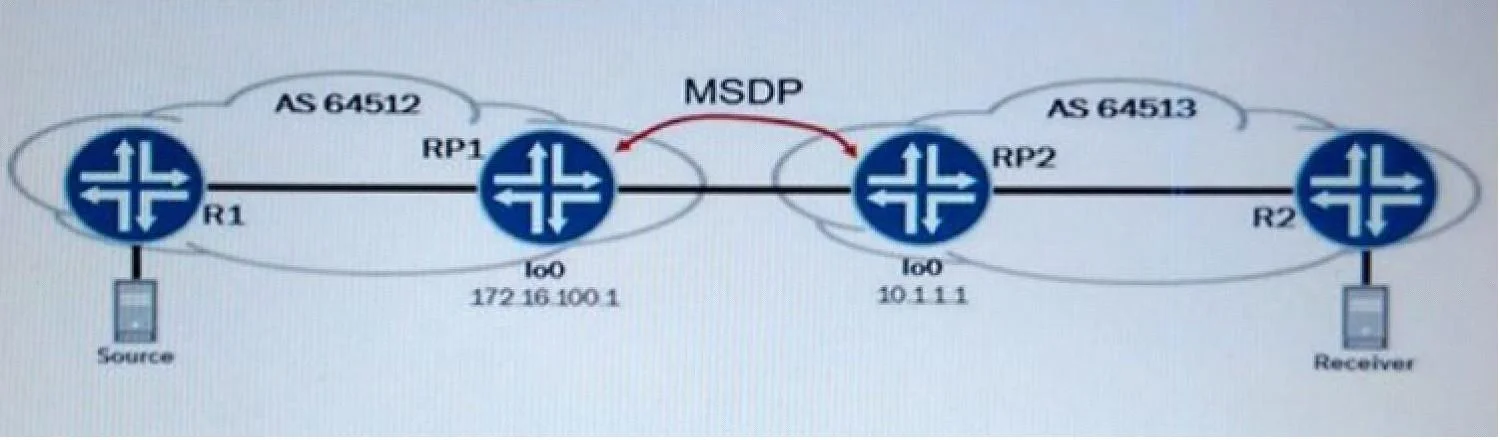
Click the Exhibit button. RP1 and RP2 are acting as PIM-SM rendezvous points (Rps) in their autonomous system. Referring to the diagram, which purpose does the MSDP session between RP1 and RP2 serve?
Sign in or unlock JN0-663 to reveal the answer and full explanation for question #34. The question stem and answer options stay visible for context.
Multicast
Question
Click the Exhibit button. RP1 and RP2 are acting as PIM-SM rendezvous points (Rps) in their autonomous system. Referring to the diagram, which purpose does the MSDP session between RP1 and RP2 serve?
Exhibit
Options
- AMSDP allows RPs in different PIM domains to advertise any active multicast receivers to each
- BMSDP allows RPs in different PIM domains to advertise any active multicast sources to each
- CMSDP routes are used by an RP for reverse path forwarding lookups when milticast sources exist
- DMSDP allows RPs in different PIM domains to form PIM neighbor relationship with each other.
Unlock JN0-663 to see the answer
You've previewed enough free JN0-663 questions. Unlock JN0-663 for full answers, explanations, the timed quiz mode, progress tracking, and the master PDF. Question stem and options stay visible so you can still see what's on the exam.
Topics
#MSDP#PIM-SM#rendezvous point#multicast sources