
Juniper
JN0-637 · Question #14
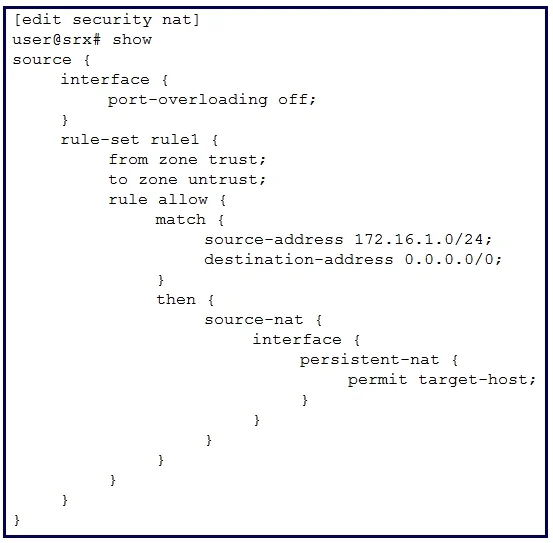
Referring to the exhibit, which two statements are correct about the NAT configuration? (Choose two.)
Sign in or unlock JN0-637 to reveal the answer and full explanation for question #14. The question stem and answer options stay visible for context.
Complex NAT Deployments
Question
Referring to the exhibit, which two statements are correct about the NAT configuration? (Choose two.)
Exhibit
Options
- ABoth the internal and the external host can initiate a session after the initial translation.
- BOnly a specific host can initiate a session to the reflexive address after the initial session.
- CAny external host will be able to initiate a session to the reflexive address.
- DThe original destination port is used for the source port for the session.
Unlock JN0-637 to see the answer
You've previewed enough free JN0-637 questions. Unlock JN0-637 for full answers, explanations, the timed quiz mode, progress tracking, and the master PDF. Question stem and options stay visible so you can still see what's on the exam.
Topics
#reflexive NAT#source NAT#session initiation#NAT policies