
Juniper
JN0-452 · Question #39
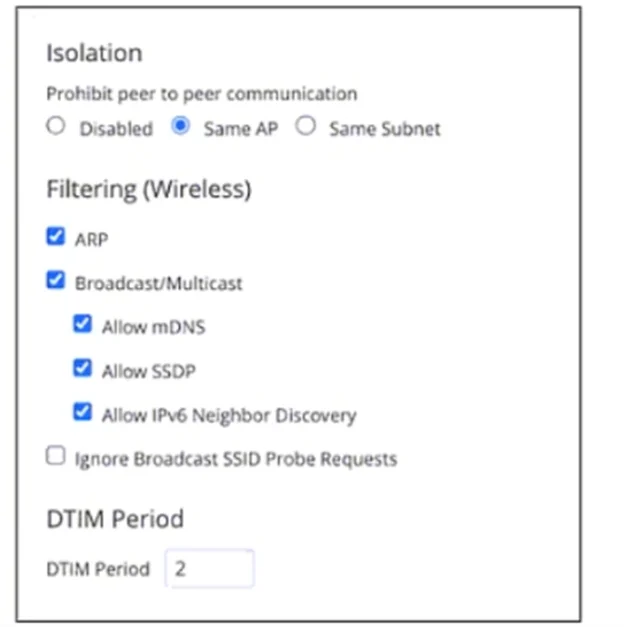
Click the Exhibit button. Referring to the exhibit, which two statements are true? (Choose two.)
Sign in or unlock JN0-452 to reveal the answer and full explanation for question #39. The question stem and answer options stay visible for context.
Mist AI Wireless Deployment
Question
Click the Exhibit button. Referring to the exhibit, which two statements are true? (Choose two.)
Exhibit
Options
- AClients connected to the same AP remain isolated from each other.
- BAll ARP broadcasts on the wired network are blocked from going out of the wireless interface.
- CClients connected to the same AP maintain communication with each other.
- DAll ARP broadcasts on the wired network are sent out of the wireless interface.
Unlock JN0-452 to see the answer
You've previewed enough free JN0-452 questions. Unlock JN0-452 for full answers, explanations, the timed quiz mode, progress tracking, and the master PDF. Question stem and options stay visible so you can still see what's on the exam.
Topics
#client isolation#ARP broadcast#WLAN policy#wireless interface