
Juniper
JN0-363 · Question #27
JN0-363 Question #27: Real Exam Question with Answer & Explanation
Sign in or unlock JN0-363 to reveal the answer and full explanation for question #27. The question stem and answer options stay visible for context.
Question
Referring to the exhibit. You are asked to configure OSPF between routers R1 and R2 using IPv6 addresses. Which two tasks will accomplish your objective? (Choose two.)
Exhibit
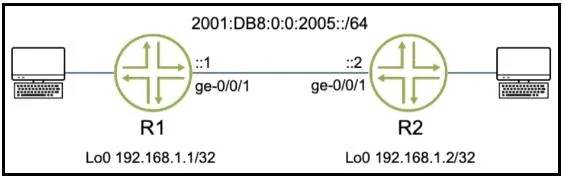
Options
- AIssue the sec protocols ospf area 0.0.0.0 interface ge-0/0/1.0 command.
- BUnder the [edit routing-options] hierarchy, configure a 32-bit router ID.
- Cissue the set protocols ospf3 area 0.0.0.0 interface ge-0/0/1.0 command.
- DUnder the [edit routing-options] hierarchy, configure a 128-bit router ID.
Unlock JN0-363 to see the answer
You've previewed enough free JN0-363 questions. Unlock JN0-363 for full answers, explanations, the timed quiz mode, progress tracking, and the master PDF. Question stem and options stay visible so you can still see what's on the exam.