
Juniper
JN0-363 · Question #10
JN0-363 Question #10: Real Exam Question with Answer & Explanation
Sign in or unlock JN0-363 to reveal the answer and full explanation for question #10. The question stem and answer options stay visible for context.
Question
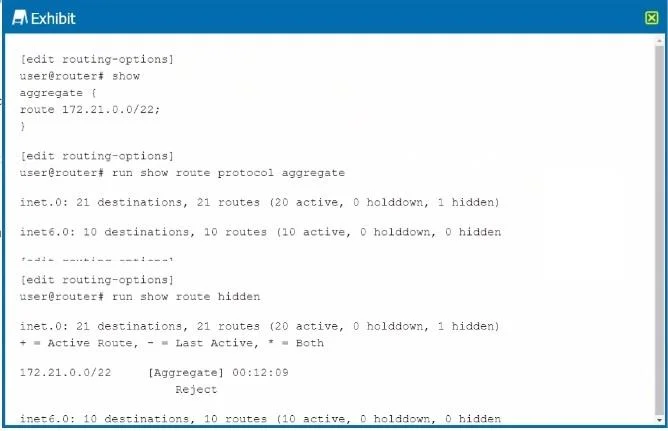
Referring to the exhibit, you have configured an aggregate route that represents the 172.21.0.0/24, 172.21.1.0/24, and 172.21.2.0/24 networks. However, when you view the routing table, your new route hidden. Which action would you perform to determine the problem?
Exhibit
Options
- AVerify that you have active contributing routes on the device.
- BVerify that you have configured a policy on the device to accept aggregate routes.
- CVerify that you have defined a metric value for the aggregate route.
- DVerify that you have set the preference to a lower default value.
Unlock JN0-363 to see the answer
You've previewed enough free JN0-363 questions. Unlock JN0-363 for full answers, explanations, the timed quiz mode, progress tracking, and the master PDF. Question stem and options stay visible so you can still see what's on the exam.