
ISO-IEC-27001-LEAD-AUDITOR · Question #68
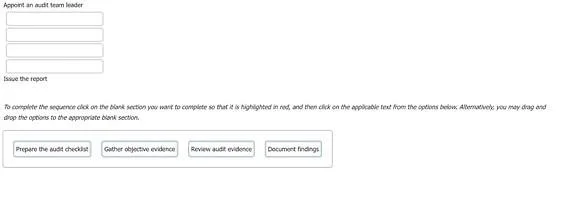
Drag and Drop Question The following options are key actions involved in a first-party audit. Order the stages to show the sequence in which the actions should take place. Answer:
The correct answer is Appoint an audit team leader; Prepare the audit checklist; Gather objective evidence; Review audit evidence; Document findings; Issue the report. First-Party Audit: Stage Sequence Explained A first-party audit is an internal audit where an organization audits itself against its own standards or procedures. The sequence follows a logical "prepare → execute → report" flow. --- Full Correct Sequence 1. Appoint an audit team…
Question
Drag and Drop Question The following options are key actions involved in a first-party audit. Order the stages to show the sequence in which the actions should take place. Answer:
Exhibit
Answer Area
Drag items
Correct arrangement
- Appoint an audit team leader
- Prepare the audit checklist
- Gather objective evidence
- Review audit evidence
- Document findings
- Issue the report
Explanation
First-Party Audit: Stage Sequence Explained
A first-party audit is an internal audit where an organization audits itself against its own standards or procedures. The sequence follows a logical "prepare → execute → report" flow.
Full Correct Sequence
1. Appoint an audit team leader You cannot begin planning without knowing who is responsible. The team leader owns the entire process - they scope the audit, assign tasks, and are accountable for the final report. Nothing else can meaningfully start without this person in place.
2. Prepare the audit checklist The checklist is the tool used to conduct the audit. It defines what will be examined and against which criteria. Preparing it before gathering evidence ensures the audit is structured and consistent, not ad hoc. A common mistake is skipping this and going straight to evidence collection, which leads to incomplete or unfocused audits.
3. Gather objective evidence With the checklist in hand, the team now collects factual, verifiable evidence (records, observations, interviews). "Objective" is key - the evidence must be factual, not opinion-based. This must come after the checklist so you know what you're looking for, and before review because you need the evidence before you can assess it.
4. Review audit evidence Once evidence is gathered, it is assessed against the criteria in the checklist. This is where the team determines whether requirements are met, partially met, or not met. You cannot review what hasn't been collected yet - a common sequencing error.
5. Document findings After reviewing, findings (conformities, nonconformities, observations) are formally recorded. Documenting before reviewing is a mistake - findings must be conclusions drawn from the review, not assumptions made during collection.
6. Issue the report The final step communicates results to relevant stakeholders. The report summarizes findings and may include recommendations. It must come last because it depends on all prior steps being complete and documented.
Common Misconceptions
| Mistake | Why It's Wrong |
|---|---|
| Gathering evidence before preparing the checklist | You won't know what evidence is relevant |
| Documenting findings during evidence collection | Findings require analysis, not just observation |
| Skipping the team leader appointment | Creates accountability gaps and an unscoped audit |
| Issuing the report before documenting findings | The report summarizes documented findings - it can't precede them |
The underlying logic is simple: plan → collect → analyze → report. Each stage produces an output that the next stage depends on.
Topics
Community Discussion
No community discussion yet for this question.