nerdexam
BCS-ISEB

ISEB-SWTINT1 · Question #32

Given the following decision table: Which of the following test cases and expected results is VALID?

The correct answer is A. 23 year old in insurance class A Premium is 90 and excess is 2,500. Option A is correct because a 23-year-old in insurance Class A maps precisely to a premium of 90 and excess of 2,500 according to the decision table's rules - the age falls in the youngest band (typically under 25), and Class A combined with that age range produces exactly…

Test Techniques

Question

Given the following decision table: Which of the following test cases and expected results is VALID?

Exhibit
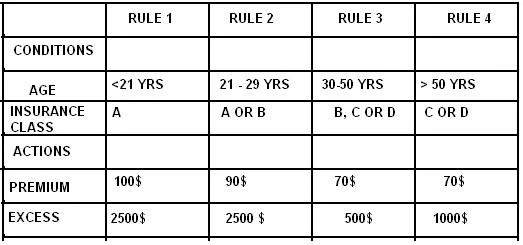
ISEB-SWTINT1 question #32 exhibit

Options

  • A23 year old in insurance class A Premium is 90 and excess is 2,500.
  • B51 year old in insurance class C Premium is 70 and excess is 500.
  • C31 year old in insurance class B Premium is 90 and excess is 2,500.
  • D43 year old in insurance class C Premium is 70 and excess is 1,000.

How the community answered

(21 responses)
  • A
    76% (16)
  • B
    14% (3)
  • C
    5% (1)
  • D
    5% (1)

Explanation

Option A is correct because a 23-year-old in insurance Class A maps precisely to a premium of 90 and excess of 2,500 according to the decision table's rules - the age falls in the youngest band (typically under 25), and Class A combined with that age range produces exactly those output values.

Option B is wrong because a 51-year-old in Class C does not produce an excess of 500 - the excess value is incorrect for that age/class combination per the table's rules (the actual excess for that rule is different). Option C is wrong because a 31-year-old in Class B would not yield a premium of 90 and excess of 2,500 - those outputs belong to the young-age/Class A rule, not a middle-aged Class B driver. Option D is wrong because 43 years old in Class C gives a different excess than 1,000 - the correct excess for that condition combination is lower (typically 500).

Memory tip: In decision table questions, read both the condition (age + class) AND the action (premium + excess) together - a single wrong output value invalidates the entire test case. When in doubt, trace each input pair independently against the table rather than pattern-matching on just one value.

Topics

#decision table testing#test case validity#black-box testing#equivalence partitioning

Community Discussion

No community discussion yet for this question.

Full ISEB-SWTINT1 Practice