
HPE7-A08 · Question #36
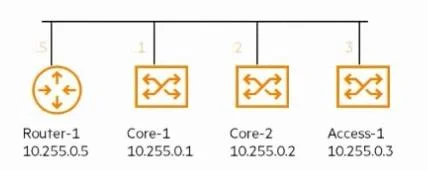
You are configuring OSPF on each of the devices shown. After verifying the OSPF neighbor table on each, you notice that Router-1 and Access-1 have neighbors in the 2WAY state. What is the reason for…
The correct answer is C. This is normal behavior for OSPF neighbors on a broadcast network. On a broadcast network, OSPF routers only form full adjacencies with the DR and BDR. All other routers remain in the 2-WAY state with each other. Router-1 and Access-1 are not DR or BDR, so their relationship remains at 2-WAY, which is the expected and correct OSPF behavior for…
Question
You are configuring OSPF on each of the devices shown. After verifying the OSPF neighbor table on each, you notice that Router-1 and Access-1 have neighbors in the 2WAY state. What is the reason for this?
Exhibit
Options
- ARouter-1 and Access-1 have reached a tie in the DR election.
- BRouter-1 and Access-1 have no OSPF networks to advertise.
- CThis is normal behavior for OSPF neighbors on a broadcast network.
- DIGMP snooping has been configured on Router-1 and Access-1.
How the community answered
(37 responses)- A11% (4)
- B3% (1)
- C81% (30)
- D5% (2)
Explanation
On a broadcast network, OSPF routers only form full adjacencies with the DR and BDR. All other routers remain in the 2-WAY state with each other. Router-1 and Access-1 are not DR or BDR, so their relationship remains at 2-WAY, which is the expected and correct OSPF behavior for broadcast segments.
Topics
Community Discussion
No community discussion yet for this question.