
HPE7-A08 · Question #136
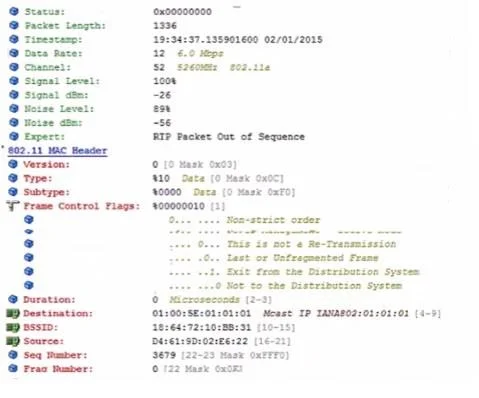
Refer to the exhibit. A university runs its own TV station in the city. The IT department deploys a multimedia server so the TV productions can be sent out to the entire campus over the IP network…
The correct answer is C. Dynamic Multicast Optimization and Multicast Transmission Optimization. Dynamic Multicast Optimization (DMO) solves the root cause: in wireless networks, multicast is sent as a broadcast at the lowest basic rate, so every client on the WLAN receives it regardless of group membership. DMO converts multicast streams into unicast transmissions…
Question
Refer to the exhibit. A university runs its own TV station in the city. The IT department deploys a multimedia server so the TV productions can be sent out to the entire campus over the IP network using multicast- based communications. In order to improve the bandwidth consumption, PIM Sparse Mode and IGMP Snooping features are enabled. When wireless users join the multicast groups, all users connected to the same WLAN experience poor network performance. However, wired users are not affected in this way. While troubleshooting, the network administrator saves the packet captures shown in the exhibit and concludes that all users, even those not joining the multicast group, receive the same multicast flow at slow speeds. Which features should the network administrator enable to fix the problem?
Exhibit
Options
- AARP broadcast conversion into unicast and Multicast Transmission Optimization
- BDynamic Multicast Optimization and UCC QoS correction
- CDynamic Multicast Optimization and Multicast Transmission Optimization
- DUCC QoS correction and Multicast Transmission Optimization
How the community answered
(29 responses)- A14% (4)
- B24% (7)
- C55% (16)
- D7% (2)
Explanation
Dynamic Multicast Optimization (DMO) solves the root cause: in wireless networks, multicast is sent as a broadcast at the lowest basic rate, so every client on the WLAN receives it regardless of group membership. DMO converts multicast streams into unicast transmissions directed only at subscribing clients, eliminating unwanted traffic for non-members. Multicast Transmission Optimization (MTO) complements this by dynamically selecting a higher transmission rate for multicast, addressing the slow-speed symptom.
Why the distractors fail:
- A - ARP broadcast conversion handles ARP packets, not multicast video streams; it solves a different broadcast problem entirely.
- B - UCC (Unified Communications and Collaboration) QoS correction targets voice/video quality for UC platforms (e.g., Webex, Teams), not general IP multicast flooding over WLAN.
- D - Same UCC mismatch; pairing it with MTO still leaves the core multicast flooding issue unresolved since DMO is absent.
Memory tip: Think "DMO = who gets it, MTO = how fast it goes." Wired networks use IGMP Snooping to filter multicast per port, but wireless APs broadcast multicast to everyone - DMO brings that same targeting to wireless by converting to unicast, and MTO removes the slow-rate penalty.
Topics
Community Discussion
No community discussion yet for this question.