
HP0-Y49 · Question #2
Refer to the exhibit. Exhibit Comware switch output. A network administrator has implemented link aggregation on an HP Comware switch using LACP. Assume the two ports are functioning at the data…
The correct answer is B. The link is up, but LACP failed the negotiation on the port. Port Status: S -- Selected, U -- Unselected Flags: A -- LACP_Activity, B -- LACP_Timeout, C -- Aggregation, D -- Synchronization, E -- Collecting, F -- Distributing, G -- Defaulted, H -- Expired The flag is a one-octet LACP state flags field. From the least to the most…
Question
Refer to the exhibit. Exhibit Comware switch output. A network administrator has implemented link aggregation on an HP Comware switch using LACP. Assume the two ports are functioning at the data link layer between the Comware switch neighboring switch. The network administrator execution display link-aggregation verbose command and notices the flag of AG for the two links. As shown in the exhibit. What does this indicate?
Exhibit
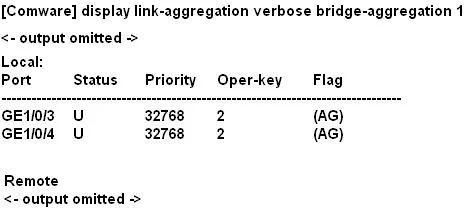
Options
- AThe link is marked as a backup because there are already eight active links in the aggregation
- BThe link is up, but LACP failed the negotiation on the port
- CThe link is down
- DThe link is up, but LACP has been disabled on the port.
How the community answered
(50 responses)- A10% (5)
- B82% (41)
- C6% (3)
- D2% (1)
Explanation
Port Status: S -- Selected, U -- Unselected Flags: A -- LACP_Activity, B -- LACP_Timeout, C -- Aggregation, D -- Synchronization, E -- Collecting, F -- Distributing, G -- Defaulted, H -- Expired The flag is a one-octet LACP state flags field. From the least to the most significant bit, they are represented by A through H as follows: A indicates whether LACP is enabled. 1 for enabled and 0 for disabled. B indicates the timeout control value. 1 for short timeout, and 0 for long timeout. C indicates whether the link is considered as aggregatable by the sending system. 1 for true, and 0 for false. D indicates whether the link is considered as synchronized by the sending system. 1 for true, and E indicates whether the sending system considers that collection of incoming frames is enabled on the link. 1 for true and 0 for false. F indicates whether the sending system considers that distribution of outgoing frames is enabled on the link. 1 for true and 0 for false. G indicates whether the receive state machine of the sending system is using default operational partner information. 1 for true and 0 for false. H indicates whether the receive state machine of the sending system is in the expired state. 1 for true and 0 for false.
Topics
Community Discussion
No community discussion yet for this question.