
HP0-J67 · Question #2
Refer to the exhibit. A customer reports poor application performance on their Oracle database, which is on an existing tho node HP P4500 virtualization SAN. The customer provides you with the chart…
The correct answer is C. Hard drive background tasks cause a bottleneck on the cluster. The customer's graph, indicating poor application performance on their SAN, likely points to internal storage system operations as the cause of the bottleneck. Hard drive background tasks often generate I/O patterns that are distinct from application-driven workloads and can…
Question
Refer to the exhibit. A customer reports poor application performance on their Oracle database, which is on an existing tho node HP P4500 virtualization SAN. The customer provides you with the chart in the exhibit. Wich assumption can you make based on this graph?
Exhibit
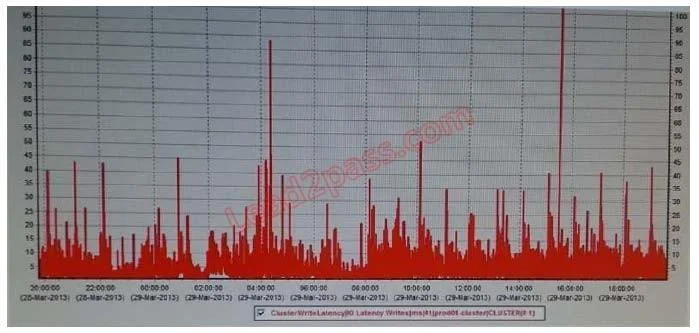
Options
- AAsynchronous replication from this cluster causes a bottleneck.
- BDatabase read operations cause a bottleneck on the cluster
- CHard drive background tasks cause a bottleneck on the cluster
- DWriting archive logs causes a bottleneck on the cluster
How the community answered
(33 responses)- A6% (2)
- B15% (5)
- C61% (20)
- D18% (6)
Why each option
The customer's graph, indicating poor application performance on their SAN, likely points to internal storage system operations as the cause of the bottleneck. Hard drive background tasks often generate I/O patterns that are distinct from application-driven workloads and can impact performance.
Asynchronous replication typically manifests as consistent background write I/O, which is distinct from the often periodic or sustained resource contention caused by internal drive maintenance tasks.
Database read operations would exhibit read-heavy I/O patterns, usually correlated with active user queries or reporting, rather than the internal background activity implied by the correct answer.
Hard drive background tasks, such as RAID rebuilds, garbage collection, or parity checks, can consume significant I/O resources and introduce latency on a storage area network (SAN). If the exhibit's graph shows periodic performance degradation or I/O spikes that do not correlate with application activity, these internal maintenance tasks are a probable cause for the bottleneck.
Writing archive logs would show a write-intensive I/O pattern directly tied to database transaction volume, which differs from the non-application-specific I/O of background drive tasks.
Concept tested: SAN performance bottleneck identification
Topics
Community Discussion
No community discussion yet for this question.