
HP0-J67 · Question #19
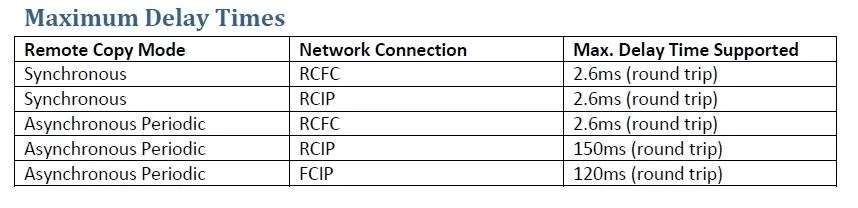
You need to review desigh due to complaints from the customer regarding performance of virtual volumes. You make following notes: - Primary DC to Secondary DC = 30 miles and 5 ms roundtrip latency…
The correct answer is D. Convert all replication jobs to Periodic Asynchronous. The customer's performance issues with virtual volumes are likely caused by the synchronous replication over 5 ms latency between the primary and secondary data centers. Converting this specific replication to periodic asynchronous will resolve the primary site's write…
Question
You need to review desigh due to complaints from the customer regarding performance of virtual volumes. You make following notes:
- Primary DC to Secondary DC = 30 miles and 5 ms roundtrip latency,
synchronous replication
- Primary DC to Disaster Recovery DC = 200 miles and 15 ms latency,
periodic Async. replication. How should you resolve their performance problem?
Exhibit
Options
- AConvert all replication jobs to Synchronous Long Distance.
- BConvert the replication job from the primary DC to the DR DC to Synchronous Long Distance.
- CConvert the replication job from the primary DC to the; Secondary DC to Synchronous Long Distance.
- DConvert all replication jobs to Periodic Asynchronous.
How the community answered
(43 responses)- A23% (10)
- B12% (5)
- C7% (3)
- D58% (25)
Why each option
The customer's performance issues with virtual volumes are likely caused by the synchronous replication over 5 ms latency between the primary and secondary data centers. Converting this specific replication to periodic asynchronous will resolve the primary site's write performance bottleneck.
Converting all replication jobs to Synchronous Long Distance would still retain the blocking nature of synchronous replication, thus failing to resolve the existing performance problems caused by latency, and potentially worsening them for the DR DC link.
The replication job to the DR DC is already periodic asynchronous, which is appropriate for 15 ms latency and does not cause primary site performance issues; converting it to synchronous would introduce, not resolve, performance problems.
Converting the existing synchronous replication to 'Synchronous Long Distance' still means synchronous operations, which will continue to block primary writes and will not resolve the performance issues caused by the 5 ms latency to the Secondary DC.
Synchronous replication inherently introduces latency to primary site write operations, as it waits for confirmation from the secondary site before acknowledging the write. With 5 ms roundtrip latency, this delay directly impacts virtual volume performance, and converting to periodic asynchronous replication allows primary writes to proceed without waiting for remote acknowledgment, thereby improving performance.
Concept tested: Impact of synchronous vs. asynchronous replication on storage performance
Source: https://learn.microsoft.com/en-us/windows-server/storage/storage-replica/storage-replica-overview
Topics
Community Discussion
No community discussion yet for this question.