
H12-323_V2.0 · Question #155
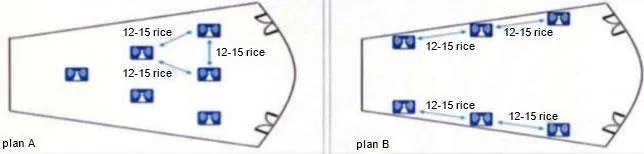
When designing the WLAN network planning for the lecture hall scenario, the engineer proposed two network planning solutions as shown in the figure. Which of the following descriptions of the two…
The correct answer is A. If the lecture hall is less than 6 meters high, it is recommended to use solution A, using an indoor C. It is recommended to adopt solution A. If the indoor floor height is greater than 6 meters, the D. If the reported floor height is greater than 6 meters, it is recommended to adopt solution B, using. Options A, C, and D correctly capture the height-based decision logic for WLAN AP deployment in large venues. For lecture halls under 6 meters, Solution A using standard indoor omnidirectional (ceiling-mounted) APs is appropriate because the signal can adequately cover the…
Question
When designing the WLAN network planning for the lecture hall scenario, the engineer proposed two network planning solutions as shown in the figure. Which of the following descriptions of the two solutions are correct? (Multiple choice)
Exhibit
Options
- AIf the lecture hall is less than 6 meters high, it is recommended to use solution A, using an indoor
- BIf the lecture hall is less than 6 meters high, it is recommended to use solution B, using an indoor
- CIt is recommended to adopt solution A. If the indoor floor height is greater than 6 meters, the
- DIf the reported floor height is greater than 6 meters, it is recommended to adopt solution B, using
How the community answered
(19 responses)- A79% (15)
- B21% (4)
Explanation
Options A, C, and D correctly capture the height-based decision logic for WLAN AP deployment in large venues. For lecture halls under 6 meters, Solution A using standard indoor omnidirectional (ceiling-mounted) APs is appropriate because the signal can adequately cover the horizontal space without excessive attenuation or dead zones. When ceiling height exceeds 6 meters, the propagation angle of omnidirectional APs becomes problematic - signals lose strength before reaching seated users - so Solution B with directional or high-gain APs (often wall-mounted, aimed downward) is preferred, which is why both C and D are correct: C affirms Solution A's general use with a condition, and D specifies Solution B for the tall-ceiling scenario.
Why B is wrong: Option B incorrectly recommends Solution B for ceilings under 6 meters - that reverses the guidance. Solution B's directional coverage is unnecessary overhead for a standard-height hall where omnidirectional APs already provide uniform coverage.
Memory tip: Think of it as a height threshold rule - "6 meters is the ceiling switch": below 6m, go A (standard omni); above 6m, go B (directional). If you remember that tall spaces need APs that can "aim down," you'll never mix up the two solutions.
Topics
Community Discussion
No community discussion yet for this question.