
H12-323_V2.0 · Question #116
In the WLAN network intelligent roaming scenario, WAC will select the target AP that triggers the terminal to roam based on factors such as signal-to-noise ratio, access rate, and load balancing…
The correct answer is A. 2,4,1,3,5. Option A (2,4,1,3,5) is correct because it matches the logical sequence of the 802.11k-assisted roaming selection process: the WAC first confirms the terminal supports 802.11k (step 2), then sends a Neighbor Report Request through the current AP (step 4), the terminal responds…
Question
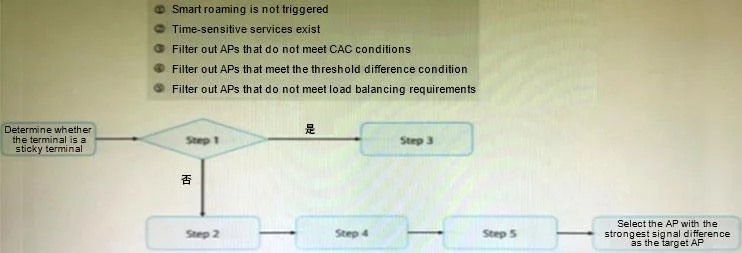
In the WLAN network intelligent roaming scenario, WAC will select the target AP that triggers the terminal to roam based on factors such as signal-to-noise ratio, access rate, and load balancing. The figure shows the selection process of the roaming target AP when the terminal supports the 802.11k protocol. Which of the following is correct?
Exhibit
Options
- A2,4,1,3,5
- B2,5,1,3,4
- C2,4,1,5,3
- D2,5,1,4,3
How the community answered
(25 responses)- A80% (20)
- B4% (1)
- C12% (3)
- D4% (1)
Explanation
Option A (2,4,1,3,5) is correct because it matches the logical sequence of the 802.11k-assisted roaming selection process: the WAC first confirms the terminal supports 802.11k (step 2), then sends a Neighbor Report Request through the current AP (step 4), the terminal responds with its Neighbor Report listing surrounding APs (step 1), the WAC combines this list with its own SNR/load/rate metrics to evaluate candidates (step 3), and finally selects and steers the terminal to the optimal target AP (step 5).
Why the distractors fail:
- B (2,5,1,3,4) incorrectly places the final roaming decision (5) before the terminal even returns its neighbor report (1) - you can't select a target without the data.
- C (2,4,1,5,3) jumps to AP selection (5) before the evaluation/analysis step (3) is complete - selection must follow analysis, not precede it.
- D (2,5,1,4,3) both moves the decision (5) too early and puts the neighbor report request (4) after the terminal already responds (1), which is impossible - the request must come before the response.
Memory tip: Use the phrase "Check → Request → Receive → Analyze → Decide" - in 802.11k roaming, the WAC always verifies capability before requesting data, and always analyzes before deciding. Any answer that reverses "Receive before Request" or "Decide before Analyze" is wrong.
Topics
Community Discussion
No community discussion yet for this question.