
H12-323_V2.0 · Question #115
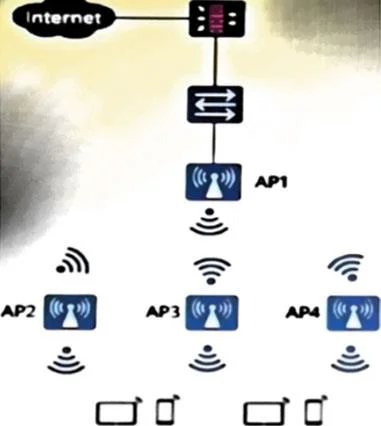
As shown in the figure, this is a WLAN network diagram deployed by an enterprise using a Mesh networking architecture. The network contains multiple devices. Which of the following devices has the…
The correct answer is B. AP1. In a Mesh WLAN network, the portal is the device that bridges between the wireless mesh (the WDS - Wireless Distribution System) and the external wired network (distribution system). AP1 is correct because it is the root AP / Mesh Portal Point (MPP) - the node with a direct…
Question
As shown in the figure, this is a WLAN network diagram deployed by an enterprise using a Mesh networking architecture. The network contains multiple devices. Which of the following devices has the portal function?
Exhibit
Options
- AAP2
- BAP1
- CAP4
- DAP3
How the community answered
(48 responses)- A6% (3)
- B81% (39)
- C2% (1)
- D10% (5)
Explanation
In a Mesh WLAN network, the portal is the device that bridges between the wireless mesh (the WDS - Wireless Distribution System) and the external wired network (distribution system). AP1 is correct because it is the root AP / Mesh Portal Point (MPP) - the node with a direct wired uplink to the enterprise network, making it the sole gateway through which mesh traffic enters and exits the wired infrastructure.
AP2, AP3, and AP4 are Mesh Access Points (MAPs) - they relay traffic wirelessly between each other and back to AP1, but they have no direct wired connection to the upstream network, so they cannot perform the portal function. The portal role belongs exclusively to the AP that terminates the mesh on the wired side.
Memory tip: Think of "portal" literally - it's the doorway between the wireless mesh world and the wired world. In any Mesh diagram, trace which AP has the wired cable going upstream; that AP is always the portal, and it's typically labeled AP1 (the root/first node in the hierarchy).
Topics
Community Discussion
No community discussion yet for this question.