nerdexam
GIAC

GPEN · Question #297

John works as a Network Security Professional. He is assigned a project to test the security of with netcat and sends a bad html request in order to retrieve information about the service on the host.

The correct answer is A. Banner grabbing. Banner grabbing involves connecting to a service and sending a request (often malformed) to read the response header and identify software type and version. John uses netcat to send a bad HTTP request and capture the server's response banner.

Penetration Testing Foundations & Reconnaissance

Question

John works as a Network Security Professional. He is assigned a project to test the security of with netcat and sends a bad html request in order to retrieve information about the service on the host. Which of the following attacks is John using?

Exhibit
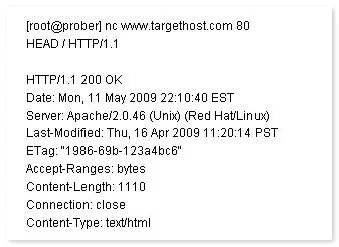
GPEN question #297 exhibit

Options

  • ABanner grabbing
  • BWar driving
  • CEavesdropping
  • DSniffing

How the community answered

(45 responses)
  • A
    71% (32)
  • B
    18% (8)
  • C
    7% (3)
  • D
    4% (2)

Why each option

Banner grabbing involves connecting to a service and sending a request (often malformed) to read the response header and identify software type and version. John uses netcat to send a bad HTTP request and capture the server's response banner.

ABanner grabbingCorrect

Banner grabbing is a reconnaissance technique where an attacker connects to an open port and sends a crafted or malformed request to elicit a service response that reveals the server software, version, and OS. Using netcat to send a bad HTTP request and reading the resulting response headers is a textbook example of active banner grabbing performed during the pre-attack information gathering phase.

BWar driving

War driving involves physically driving around with wireless scanning equipment to detect and enumerate nearby Wi-Fi networks, which is unrelated to probing a specific host with netcat.

CEavesdropping

Eavesdropping is the passive interception of communications between two parties without their knowledge, not the active probing of a service with crafted requests.

DSniffing

Sniffing is the passive capture of network packets as they traverse a shared medium or network segment, not the active technique of sending requests to a host to read its banner.

Concept tested: Banner grabbing for service fingerprinting

Source: https://owasp.org/www-project-web-security-testing-guide/latest/4-Web_Application_Security_Testing/01-Information_Gathering/02-Fingerprint_Web_Server

Topics

#banner grabbing#netcat#service fingerprinting#HTTP request

Community Discussion

No community discussion yet for this question.

Full GPEN Practice