
FCSS_SASE_AD-25 · Question #34
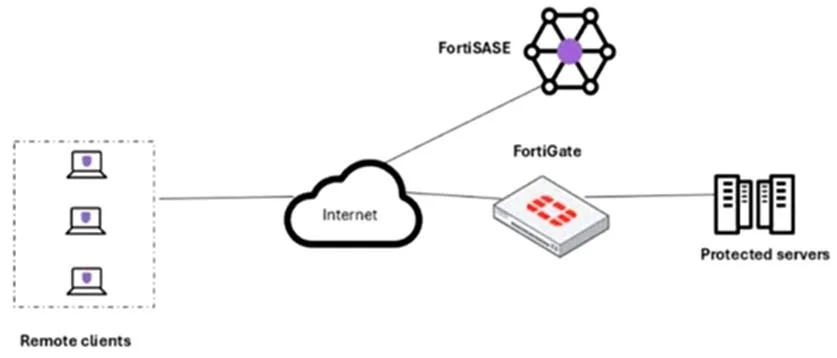
Refer to the exhibit. A customer needs to implement device posture checks for their remote endpoints while accessing the protected server. They also want the TCP traffic between the remote endpoints…
The correct answer is A. Configure ZTNA servers and ZTNA policies on FortiGate. B. Configure FortiGate as a zero trust network access (ZTNA) access proxy. To enforce device posture checks and ensure that TCP traffic flows through FortiGate, the FortiGate must act as a ZTNA access proxy and host the ZTNA servers and policies. This setup allows posture validation via FortiSASE while routing traffic securely to protected servers…
Question
Refer to the exhibit. A customer needs to implement device posture checks for their remote endpoints while accessing the protected server. They also want the TCP traffic between the remote endpoints and the protected servers to be processed by FortiGate. In this scenario, which two setups will achieve these requirements? (Choose two.)
Exhibit
Options
- AConfigure ZTNA servers and ZTNA policies on FortiGate.
- BConfigure FortiGate as a zero trust network access (ZTNA) access proxy.
- CConfigure ZTNA tags on FortiGate.
- DConfigure private access policies on FortiSASE with ZTNA.
How the community answered
(26 responses)- A85% (22)
- C4% (1)
- D12% (3)
Explanation
To enforce device posture checks and ensure that TCP traffic flows through FortiGate, the FortiGate must act as a ZTNA access proxy and host the ZTNA servers and policies. This setup allows posture validation via FortiSASE while routing traffic securely to protected servers through
Topics
Community Discussion
No community discussion yet for this question.