
FCSS_SASE_AD-23 · Question #28
Refer to the exhibit. A company has a requirement to inspect all the endpoint internet traffic on FortiSASE, and exclude Google Maps traffic from the FortiSASE VPN tunnel and redirect it to the…
The correct answer is C. Configure the Google Maps FQDN as a split tunneling destination on the FortiSASE endpoint profile. Split tunneling allows specific traffic (such as Google Maps) to bypass the VPN tunnel and be routed directly through the local physical interface of the endpoint. By configuring the Google Maps Fully Qualified Domain Name (FQDN) as a split tunneling destination, you ensure…
Question
Refer to the exhibit. A company has a requirement to inspect all the endpoint internet traffic on FortiSASE, and exclude Google Maps traffic from the FortiSASE VPN tunnel and redirect it to the endpoint physical Interface. Which configuration must you apply to achieve this requirement?
Exhibit
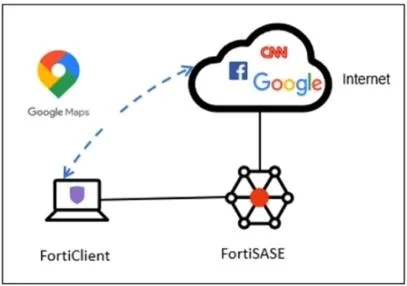
Options
- AExempt the Google Maps FQDN from the endpoint system proxy settings.
- BConfigure a static route with the Google Maps FQDN on the endpoint to redirect traffic
- CConfigure the Google Maps FQDN as a split tunneling destination on the FortiSASE endpoint profile.
- DChange the default DNS server configuration on FortiSASE to use the endpoint system DNS.
How the community answered
(16 responses)- A6% (1)
- B13% (2)
- C75% (12)
- D6% (1)
Explanation
Split tunneling allows specific traffic (such as Google Maps) to bypass the VPN tunnel and be routed directly through the local physical interface of the endpoint. By configuring the Google Maps Fully Qualified Domain Name (FQDN) as a split tunneling destination, you ensure that this traffic will not pass through the FortiSASE VPN tunnel but will instead use the endpoint's local internet connection.
Topics
Community Discussion
No community discussion yet for this question.