
Fortinet
FCSS_LED_AR-7.6 · Question #25
FCSS_LED_AR-7.6 Question #25: Real Exam Question with Answer & Explanation
Sign in or unlock FCSS_LED_AR-7.6 to reveal the answer and full explanation for question #25. The question stem and answer options stay visible for context.
Question
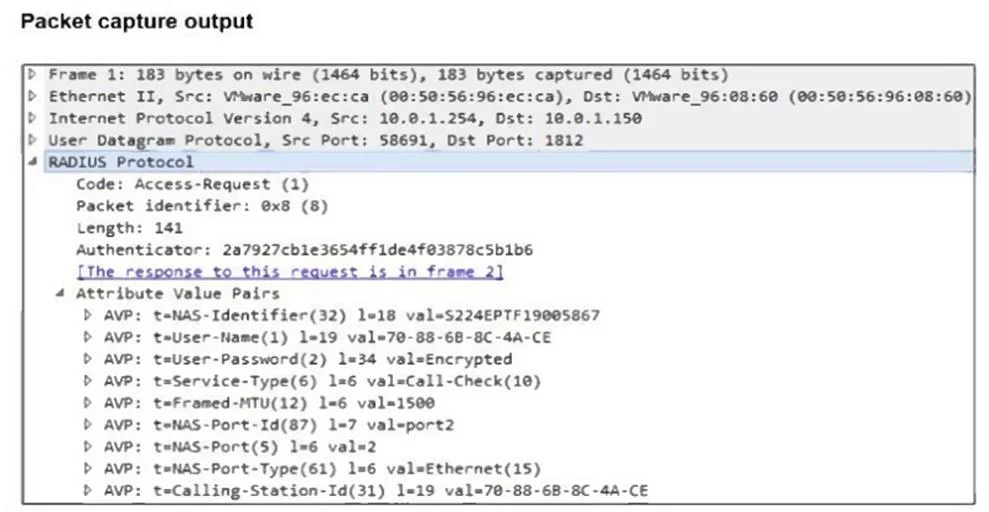
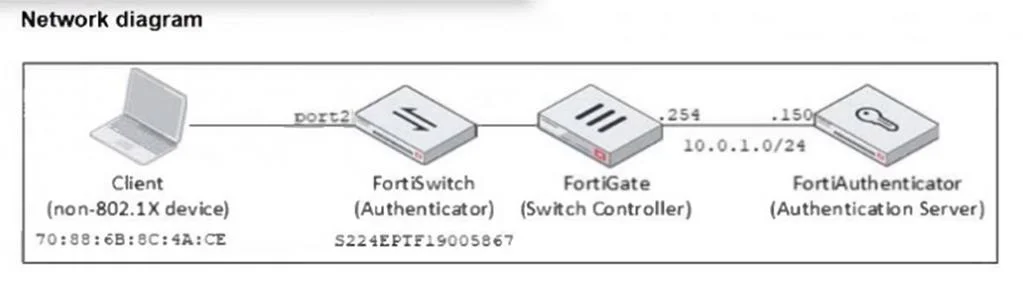
Refer to the exhibits. Examine the network diagram and packet capture shown in the exhibit. During packet capture analysis, a RADIUS Access-Request packet was detected being sent from FortiSwitch to FortiAuthenticator and passing through FortiGate. The capture shows that the User-Name attribute in the RADIUS Access-Request packet contains the client MAC address. Why is the client MAC address contained in the User-Name attribute of the RADIUS Access- Request packet?
Exhibits
Options
- AFortiAuthenticator is authenticating the client based on the device hostname.
- BFortiAuthenticator is performing machine authentication
- CMAC address-based authentication is being used for the client through MAC Authentication
- DFortiGate is authenticating the client using 802.1X authentication.
Unlock FCSS_LED_AR-7.6 to see the answer
You've previewed enough free FCSS_LED_AR-7.6 questions. Unlock FCSS_LED_AR-7.6 for full answers, explanations, the timed quiz mode, progress tracking, and the master PDF. Question stem and options stay visible so you can still see what's on the exam.