
FCSS_EFW_AD-7.6 · Question #51
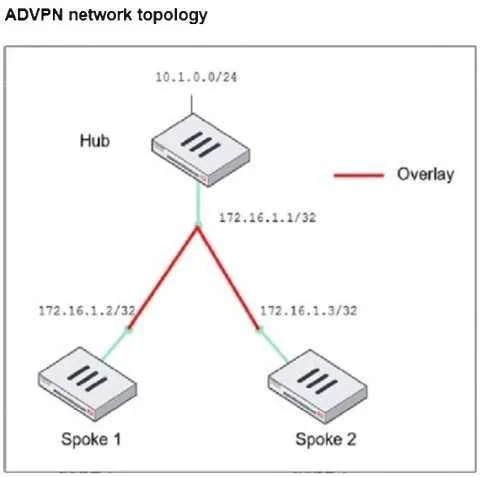
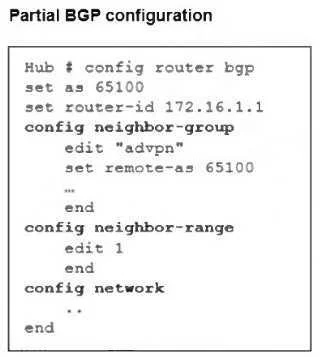
Refer to the exhibit, which shows the ADVPN network topology and partial BGP configuration. Which two parameters must an administrator configure in the config neighbor range for spokes shown in the…
The correct answer is B. set neighbor-group advpn D. set prefix 172.16.1.0 255.255.255.0. In the given ADVPN (Auto-Discovery VPN) topology, BGP is being used to dynamically establish routes between spokes. The neighbor-range configuration is crucial for simplifying BGP peer setup by automatically assigning neighbors based on their IP range. set neighbor-group advpn…
Question
Refer to the exhibit, which shows the ADVPN network topology and partial BGP configuration. Which two parameters must an administrator configure in the config neighbor range for spokes shown in the exhibit? (Choose two.)
Exhibits
Options
- Aset max-neighbor-num 2
- Bset neighbor-group advpn
- Cset route-reflector-client enable
- Dset prefix 172.16.1.0 255.255.255.0
How the community answered
(20 responses)- A15% (3)
- B65% (13)
- C20% (4)
Explanation
In the given ADVPN (Auto-Discovery VPN) topology, BGP is being used to dynamically establish routes between spokes. The neighbor-range configuration is crucial for simplifying BGP peer setup by automatically assigning neighbors based on their IP range. set neighbor-group advpn The neighbor-group parameter is used to apply pre-defined settings (such as AS number) to dynamically discovered BGP neighbors. The advpn neighbor-group is already defined in the configuration, and assigning it to the neighbor- range ensures consistent BGP settings for all spoke neighbors. set prefix 172.16.1.0 255.255.255.0 This command allows dynamic BGP peer discovery by defining a range of potential neighbor IPs (172.16.1.1 - 172.16.1.255). Since each spoke has a unique /32 IP within this subnet, this ensures that any spoke within the 172.16.1.0/24 range can automatically establish a BGP session with the hub.
Topics
Community Discussion
No community discussion yet for this question.