
FCSS_CDS_AR-7.6 · Question #68
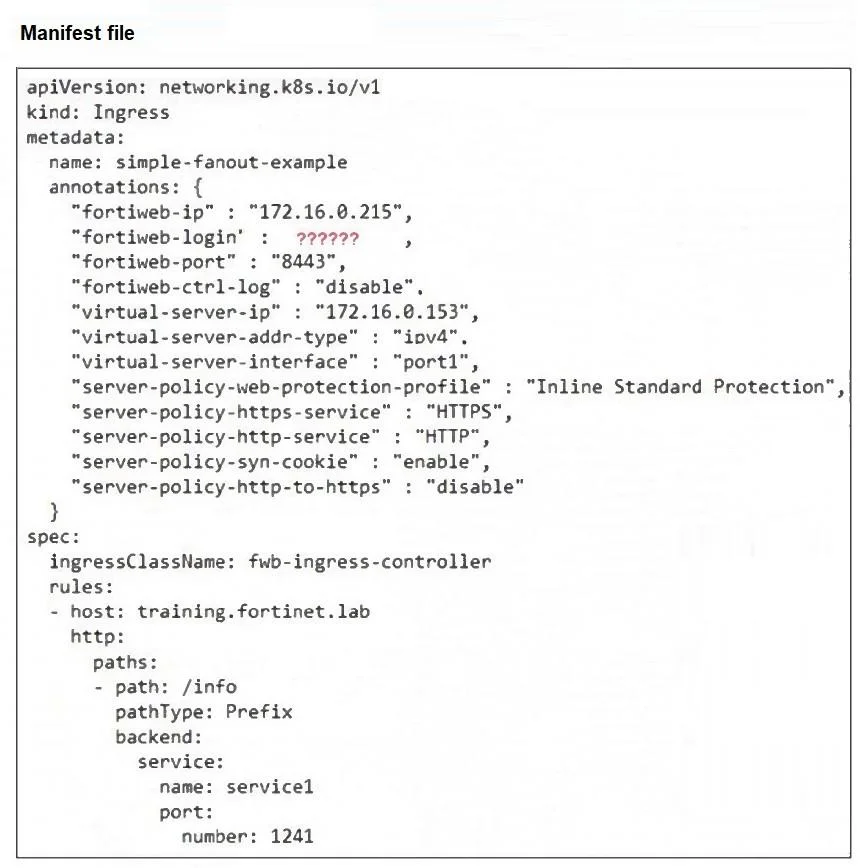
Refer to the exhibit. A team of AWS administrators is in the process of installing a FortiWeb ingress controller to protect containerized web applications in an Amazon Elastic Kubernetes Service…
The correct answer is C. They must create a Kubernetes secret with the kubectl command. The fortiweb-login field in the manifest requires credentials for the FortiWeb ingress controller to authenticate. This is not set directly in plain text; instead, administrators must create a Kubernetes secret using the kubectl command (containing the FortiWeb admin username…
Question
Refer to the exhibit. A team of AWS administrators is in the process of installing a FortiWeb ingress controller to protect containerized web applications in an Amazon Elastic Kubernetes Service (EKS) cluster. While customizing the manifest file in the image, they realize that they do not know the correct value to enter in the fortiweb-login field. How can they determine he correct value for this field?
Exhibit
Options
- AThey can refer to the output of the EKS cluster deployment.
- BThey can find the expected value in the manifest file used to deploy the pods.
- CThey must create a Kubernetes secret with the kubectl command.
- DThe correct value is the password of the FortiWeb admin account.
How the community answered
(58 responses)- A7% (4)
- B16% (9)
- C72% (42)
- D5% (3)
Explanation
The fortiweb-login field in the manifest requires credentials for the FortiWeb ingress controller to authenticate. This is not set directly in plain text; instead, administrators must create a Kubernetes secret using the kubectl command (containing the FortiWeb admin username and password), and reference it in the manifest. This ensures secure handling of authentication data.
Topics
Community Discussion
No community discussion yet for this question.