nerdexam
Dell-EMC

E10-001 · Question #66

Which process defines the writing of physical address information to a disk?

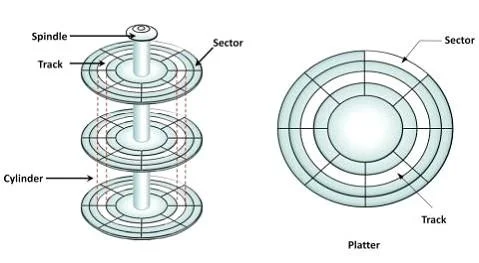
The correct answer is B. Formatting. Data on the disk is recorded on tracks, which are concentric rings on the platter around the spindle. The tracks are numbered, starting from zero, from the outer edge of the platter. The number of tracks per inch (TPI) on the platter (or the track density) measures how tightly…

Intelligent Storage Systems

Question

Which process defines the writing of physical address information to a disk?

Exhibit
E10-001 question #66 exhibit

Options

  • APartitioning
  • BFormatting
  • CZoned-bit recording
  • DCommand queuing

How the community answered

(50 responses)
  • A
    12% (6)
  • B
    78% (39)
  • C
    6% (3)
  • D
    4% (2)

Explanation

Data on the disk is recorded on tracks, which are concentric rings on the platter around the spindle. The tracks are numbered, starting from zero, from the outer edge of the platter. The number of tracks per inch (TPI) on the platter (or the track density) measures how tightly the tracks are packed on a platter. Each track is divided into smaller units called sectors. A sector is the smallest, individually addressable unit of storage. The track and sector structure is written on the platter by the drive manufacturer using a low-level formatting operation. The number of sectors per track varies according to the drive type. The first personal computer disks had 17 sectors per track. Recent disks have a much larger number of sectors on a single track. There can be thousands of tracks on a platter, depending on the physical dimensions and recording density of the platter. Typically, a sector holds 512 bytes of user data; although, some disks can be formatted with larger sector sizes. In addition to user data, a sector also stores other information, such as the sector number, head number or platter number, and track number. This information helps the controller to locate the data on the drive. A cylinder is a set of identical tracks on both surfaces of each drive platter. The location of R/W heads is referred to by the cylinder number, not by the track number.

Topics

#disk formatting#physical addressing#low-level format

Community Discussion

No community discussion yet for this question.

Full E10-001 Practice