E10-001 · Question #65
How is the internal transfer rate of disk drives defined?
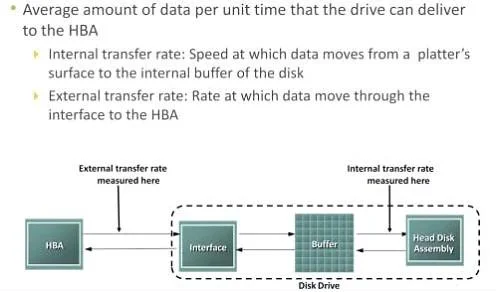
The correct answer is B. Speed at which data moves from a platter's surface to the internal buffer. Data Transfer Rate The data transfer rate (also called transfer rate) refers to the average amount of data per unit time that the drive can deliver to the HBA. In a read operation, the data first moves from disk platters to R/W heads; then it moves to the drive's internal…
Question
How is the internal transfer rate of disk drives defined?
Exhibit
Options
- ASpeed at which data moves from the read/write head to the platter
- BSpeed at which data moves from a platter's surface to the internal buffer
- CSpeed at which data moves from internal buffer to the host interface
- DSpeed at which data moves from the innermost cylinder to the read/write head
How the community answered
(42 responses)- A2% (1)
- B83% (35)
- C5% (2)
- D10% (4)
Explanation
Data Transfer Rate The data transfer rate (also called transfer rate) refers to the average amount of data per unit time that the drive can deliver to the HBA. In a read operation, the data first moves from disk platters to R/W heads; then it moves to the drive's internal buffer. Finally, data moves from the buffer through the interface to the host HBA. In a write operation, the data moves from the HBA to the internal buffer of the disk drive through the drive's interface. The data then moves from the buffer to the R/W heads. Finally, it moves from the R/W heads to the platters. The data transfer rates during the R/W operations are measured in terms of internal and external transfer rates, as shown in the slide. Internal transfer rate is the speed at which data moves from a platter's surface to the internal buffer (cache) of the disk. The internal transfer rate takes into account factors such as the seek time and rotational latency. External transfer rate is the rate at which data can move through the interface to the HBA. The external transfer rate is generally the advertised speed of the interface, such as 133 MB/s for ATA. The sustained external transfer rate is lower than the interface speed.
Topics
Community Discussion
No community discussion yet for this question.
